Interoperability fails in specific, unglamorous places. Cryptographic fill that will not load across two nations' radios. A medical evacuation chain where the receiving hospital uses different blood-product standards. Fuel couplings that do not fit. Multinational exercises exist largely to find these before an operation does.
This section covers combined and joint training. NATO and coalition exercises, bilateral programs, amphibious and airborne rehearsals, combined air operations, and special operations training across counterterrorism, reconnaissance and support to partner forces.
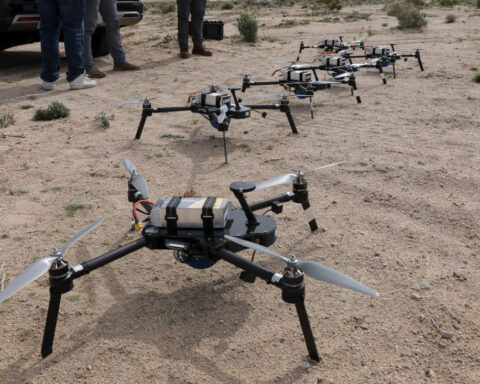
Special operations units usually field new equipment first. Unmanned systems, communications and mission software often appear in their training years before conventional forces receive them, which makes these exercises a reasonable early indicator of where wider procurement is heading.
A July 25 after-action brief lays out what happened during the sixth RAND-Joint Counter-Small Unmanned Aircraft Systems Office exercise, held the day before at Fort Belvoir. This was not another planning session. Teams ran live drills to stop drones from reaching runways.
The U.S. Navy will run its third Large Scale Exercise (LSE 25) from late July into August. This iteration brings Canadian, Japanese, and NATO representatives into the control architecture for the first time. They will sit beside U.S. commanders to test global
Finlands defence chiefs took a bold step in early 2022. They shifted every special-operations unit into one, single chain of command. Many officers cheered the plan straight off; others worried it might cramp service-level culture. Yet, the Commander of the Finnish Defence
The parent section, Exercises & Training, covers national drills, ranges and readiness reporting, while Europe & NATO carries the alliance planning and commitments these exercises test. Asia-Pacific has the region's fastest-growing multinational program.