A GPS timing signal underwrites a great deal that has nothing obvious to do with space, including artillery corrections, drone navigation and the synchronization of power grids. Losing it degrades operations nobody would describe as space-dependent.
This section covers military space. Missile warning, secure communications, positioning and timing, imagery and signals collection, launch access, and the shift from small numbers of large satellites to proliferated constellations in low orbit.
Counterspace capability gets the same treatment as the systems it targets: jamming, dazzling, cyber intrusion, co-orbital activity, and the debris question that follows any kinetic test. Orbital events are reported from tracking data and operator statements, with the limits of both made clear.
Two Congressional Research Service products, published a day apart, can’t agree on what “$17.5 billion” means for Golden Dome. The continuing resolution that followed settled a different question: for now, none of it is protected. Document Figure given What it says CRS
Los Angeles-based startup Inversion Space is developing an orbital cargo-drop system for military use. Its Arc orbital supply capsule is intended to send roughly 500 pounds of cargo from low Earth orbit to almost any point on the globe in about an
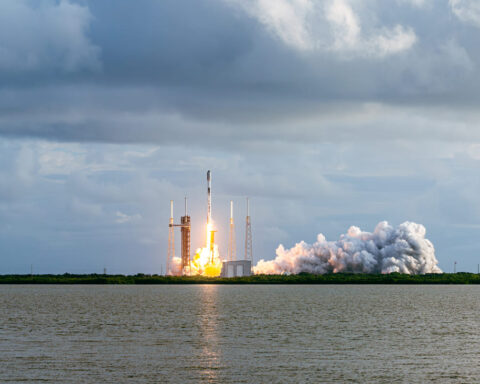
Rocket Lab has opened Launch Complex 3 at the Mid-Atlantic Regional Spaceport and set the stage for Neutron's debut flight before year-end. The ribbon-cutting took place Aug. 28 with state leaders and company executives on site. The complex sits at Pad 0-D,
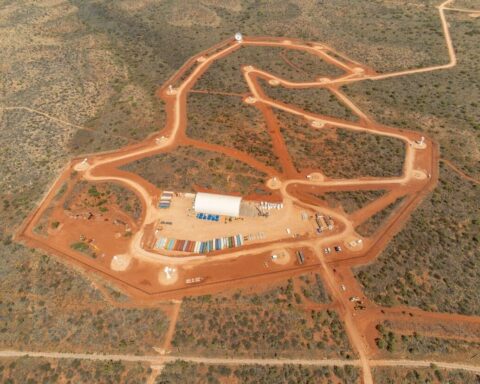
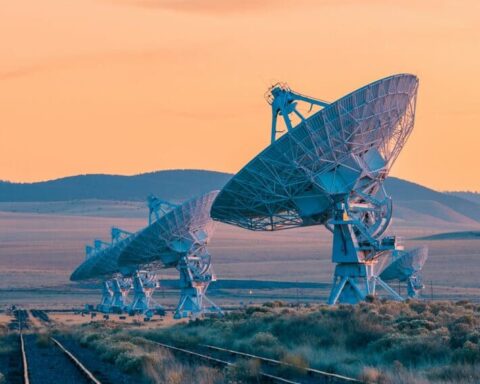
Northrop Grumman and the U.S. Space Force achieved a first for the Deep-Space Advanced Radar Capability at Site 1 in Western Australia, synchronizing multiple ground antennas to act as one radar and track several satellites in geosynchronous orbit. Program officials described a
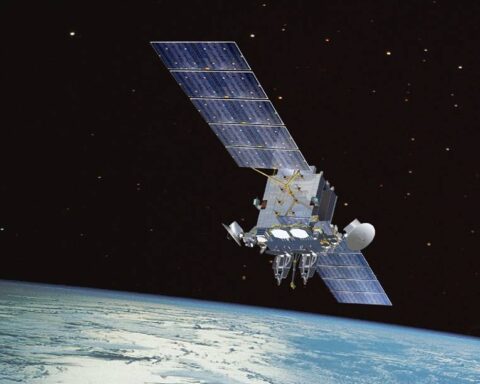
The U.S. Space Force has selected Boeing to build the first two satellites of the Evolved Strategic SATCOM program, issuing a $2.8 billion fixed-price-incentive contract that includes options for two more spacecraft. The decision, announced late July 3, positions the company to
The Space Force wants $277 million next year to launch the Military Internet (MILNET) constellation and has frozen money for the Space Development Agency's Tranche 3 Transport Layer. Defense officials confirm the shift appears in the service's fiscal 2026 budget books, released
WASHINGTON — The Chinese spacecraft Shijian-21 and Shijian-25 have come within docking range high over the equator twice this month, and data suggest a third close pass is hours away. According to industry sources, the two satellites occupy nearly identical geostationary slots