
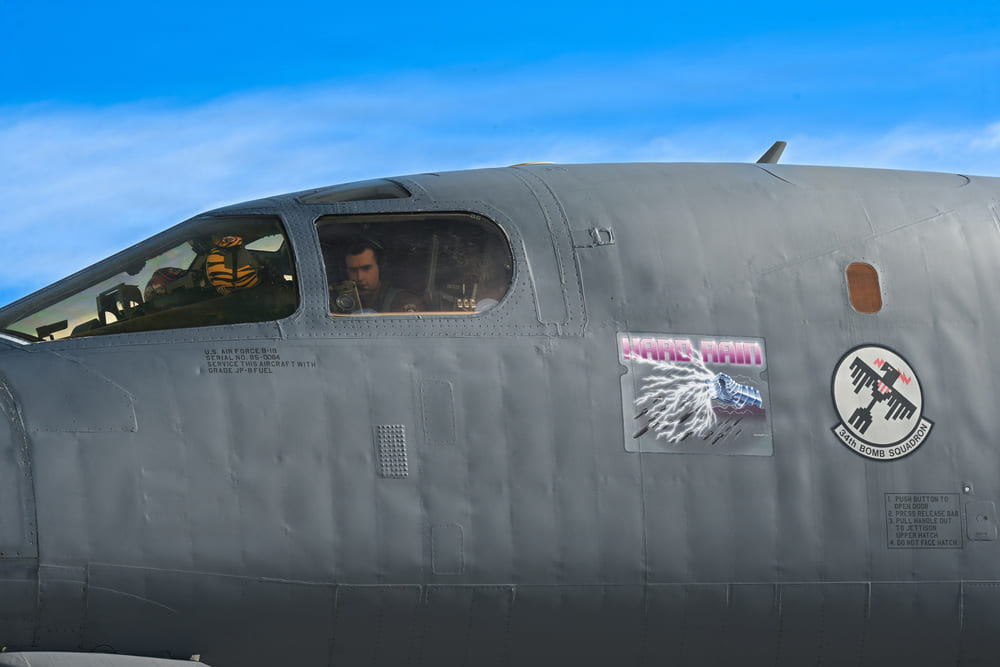
Two U.S. Air Force B-1B Lancers from Dyess Air Force Base flew across the southern Caribbean and approached Venezuela’s coastline on Oct 23. Open-source flight tracks identified the pair as BARB21 and BARB22. The traces placed them roughly 50 miles from the mainland at closest point and showed a pass near the Los Testigos islands. KC-135 tankers launched out of Florida to support the mission. Defense officials confirm a second B-1 movement in the same general area on Oct 27, described as a planned training evolution and more conservative emissions control.
Public air traffic audio and ADS-B feeds from Oct 23 captured multiple KC-135s holding in the region, and at least one RC-135 conducting signals collection. Separate logs showed an E-11A Battlefield Airborne Communications Node aircraft routing toward Puerto Rico during the window. Officials familiar with the tasking said the package operated under U.S. Southern Command control measures. The cadence on radio and the length of the tanker orbits pointed to a built-out event, not a quick transit to pad flight hours.
Eight days before the first B-1 run, three B-52Hs flew in the same waters as part of what the Air Force later called a “bomber attack demonstration mission.” Marine F-35Bs integrated during that profile. The B-1 appearances on Oct 23 and Oct 27 gave the Caribbean a second heavy-bomber presence in less than two weeks.
Reporters asked President Donald Trump on Oct 23 whether B-1s had been sent near Venezuela “to ramp up some military pressure.” He answered, “No, it’s not accurate. It’s false,” and added, “we’re not happy with Venezuela for a lot of reasons.” The denial contrasted with the wide circulation of public tracks that day and quiet acknowledgments from officials that a bomber training mission took place in the Caribbean that week.
Flight Tracks and Tanker Support
BARB21 and BARB22 departed Dyess on the U.S. morning of Oct 23. The route carried them across the Gulf of Mexico into the western Caribbean for refueling, then south and east into a long leg that ran roughly parallel to Venezuela’s coast. The tracks stayed outside Venezuelan airspace and pressed near the country’s offshore islands. The aircraft kept ADS-B on for much of the sortie, which made them easy to follow on widely used feeds. According to industry sources, the Oct 27 follow-on run hit similar waypoints but shorter windows of emissions and fewer long tanker orbits.
The callsigns matched Dyess conventions for the B-1 community. Tankers lifted about an hour and a half after the bombers, which lined up well for the push into the southern Caribbean. On the return leg, post-tanker segments appeared shorter, consistent with a turn back to the U.S. without another refuel. Defense officials confirm both events were scheduled training sorties, not ad hoc reactions, and were cleared through routine authorities for long-range missions in international airspace.
ATC audio from the region captured organized handoffs between the tankers and the bomber pair, along with altitude blocks that favored deconfliction over speed. The tracks showed racetrack patterns in the south, then a northerly exit, which is the sort of geometry crews choose when they plan to hold an area for duration rather than press further orbits deeper east. People who monitor these events daily noted the absence of last-minute altitude or route changes, a sign the plan held from brief to recovery.
RC-135 Signals Collection and E-11A Gateway
KC-135 orbits anchored north of the B-1 track line as the pair approached Venezuelan waters. At least one RC-135 operated in the area, audible on regional nets that day, which matched what spotters have caught before when the Air Force builds a picture over a busy sea lane. An E-11A BACN flew toward Puerto Rico during bomber operations. BACN serves as a high-altitude relay that ties together radios and datalinks that normally can’t talk to each other. Officials said the gateway helped keep the package and supporting aircraft on the same net across long distances where line-of-sight radios struggle.
The BACN platform has become a regular tool for missions that need theater-wide connectivity. Pairing a gateway aircraft improves coordination and supports collection without forcing every player onto the same waveform. Observers familiar with this setup read the arrangement as deliberate. The package looked built to test timing between reconnaissance, tanking, and fires delivery platforms and keep a clear comms backbone in place so crews didn’t have to juggle patchwork relays.
The radio picture fit what tanker crews prefer when they expect extended refueling windows. Tankers held at altitudes that let them serve both the inbound and the outbound legs. The bombers stayed on discrete codes for long stretches, which is common when crews want to be seen in the open systems that track those codes and feed public logs. Officials confirmed the package cleared through the region without reports of unsafe air proximity or intercepts.
B-1B Weapons Loadout and Caribbean Strike Range
The B-1B carries weapons internally across three bays and can load up to 75,000 pounds of conventional ordnance. The jet can employ the AGM-158 JASSM family and the LRASM anti-ship variant alongside other precision weapons for land and maritime targets. Internal carriage helps manage drag and signatures and preserves range at standoff. Crews can tailor a mission around long-reach missiles and still use the speed the jet was built for.
JASSM-ER reaches about 1,000 kilometers. The baseline JASSM runs around 370 kilometers. A longer-leg version has been discussed near 1,800 kilometers. LRASM builds on the extended-range JASSM and adds a seeker and autonomy optimized to prosecute ships under electronic warfare and clutter at sea. A bomber can stay outside another country’s airspace and still hold fixed sites, coastal sensors, radars, airfields, and ships at risk across the Caribbean basin. The geography in this theater favors long-reach profiles that don’t need overflight to create effects.
The Air Force has already demonstrated LRASM from the B-1. Navy and Marine units continue to expand how they plan to use LRASM across their own platforms. A B-1 set for maritime tasking can mix anti-ship missiles with other stores to fit the mission. The jet’s dash speed and altitude range compress the time a target has to react once the crew gets a launch window. Officials stressed, though, that a practiced loadout does not equal an order to use it. The two October events were training sorties in international airspace and were flown under established rules.
Crews planning long-range standoff profiles pay close attention to tanker placement and comms bridging. The October flights showed both. Tanker orbits sat where the bombers needed them, and a communications gateway was nearby to keep the picture stitched together. None of that is unusual for a force that has run global strike exercises for decades, but the visibility of those choices in public feeds drew attention far beyond the niche tracking community.
Regional Deployments and Venezuelan Response
Heavy-bomber activity in October ran alongside a broader U.S. posture in the Caribbean. The USS Gerald R. Ford carrier strike group received orders to the region during a series of interdictions against suspected narcotics vessels that continued from early September into October. Marine F-35Bs forward deployed to Puerto Rico, and additional Navy surface combatants moved into the southern Caribbean. The Pentagon framed the deployments around counter-drug and maritime security. Officials in Caracas called the moves coercive and pointed to past disputes over maritime zones and overflight.
The administration linked much of the wider campaign to narcotrafficking networks it argues have ties to the Maduro government. A United Nations expert panel criticized recent boat strikes in international waters, calling them unlawful. U.S. officials responded that the actions complied with self-defense standards. That legal fight forms the backdrop of any visible bomber movement off Venezuela’s coast, even when the aircraft remain outside territorial airspace and do not cross sovereign boundaries. The October flights stayed outside, kept ADS-B active for long periods, and used long racetrack legs rather than darting runs that might have invited misreads on intent.
Caracas highlighted its own air defenses. President Nicolás Maduro said on Oct 23 that Venezuelan forces hold “no fewer than 5,000” Igla-S man-portable air defense missiles spread across the country. Reporting reviewed documents that backed the scale of the stockpile and also noted that the number of grip stocks available to fire them remains far smaller. Venezuelan Su-30s continue to fly with Kh-31 supersonic anti-ship missiles, a pairing the country has shown before. Those weapons do not erase the gap in capability with U.S. forces, yet they make low-altitude approaches and coastal waters more demanding to operate in.
The United States has not announced any change in rules for bomber operations in the Southern Command area of responsibility tied to these two October events. No official statements described any unsafe intercepts, diversions, or air defense engagements linked to the Oct 23 or Oct 27 flights. The sorties took place in international airspace and spent long spans broadcasting position, which made them easy for the public to follow. Officials said the visibility served a purpose: to rehearse and to send a message without crossing into Venezuelan airspace or challenging air defense radars at close range.
The Oct 15 B-52 profile, described by the Air Force as a “bomber attack demonstration mission,” was planned to underline the ability to put heavy aircraft into the southern Caribbean from continental bases. Officials confirm the B-1 crews followed their own plan on Oct 23 and Oct 27 under the same broad idea. Whether that message reached its intended audience is not measurable from open data. Our analysis shows a pattern of visible training flights that stayed in international airspace, used predictable tanker support, and kept a large radio footprint so outside observers could see the activity without guessing.
REFERENCE SOURCES
- https://abcnews.go.com/Politics/1-bombers-fly-caribbean-show-force/story?id=126810062
- https://www.airandspaceforces.com/air-force-b-1s-fly-venezuela-again-show-of-force/
- https://www.airandspaceforces.com/us-aircraft-carrier-b-1-bombers-venezuela-trump-strikes/
- https://www.wsj.com/politics/national-security/u-s-sends-b-1-bombers-near-venezuela-ramping-up-military-pressure-f9514126
- https://www.reuters.com/world/americas/trump-says-report-us-sending-b-1-bombers-near-venezuela-was-false-2025-10-23/
- https://apnews.com/article/03b246ca6cf7ed9fa6d39e1f716b1754
- https://www.washingtonpost.com/world/2025/11/01/venezuela-us-militarty-aircraft-carrier-ships-strikes-caribbean-trump-maduro/
- https://www.ft.com/content/84f173b4-ac48-43d2-a5e8-f49b69496876
- https://www.militarytimes.com/news/your-military/2025/10/21/air-force-conducts-bomber-attack-demonstration-near-venezuela/
- https://www.twz.com/air/b-1-bombers-fly-off-venezuelas-coast
- https://missilethreat.csis.org/missile/jassm/
- https://www.af.mil/About-Us/Fact-Sheets/Display/Article/104500/b-1b-lancer/
- https://www.acc.af.mil/Portals/92/Docs/Fact%20Sheets%20-%202020%20Update/Facts%20Sheets%20-%202023%20Update/E-11A%20BACN_FEB%202023.pdf
- https://www.military.com/daily-news/investigations-and-features/2025/10/20/what-us-forces-face-venezuela-puts-russian-armed-military-wartime-alert.html
- https://www.reuters.com/article/world/exclusive-venezuela-holds-5000-russian-surface-to-air-manpads-missile-idUSKBN18I0E9/