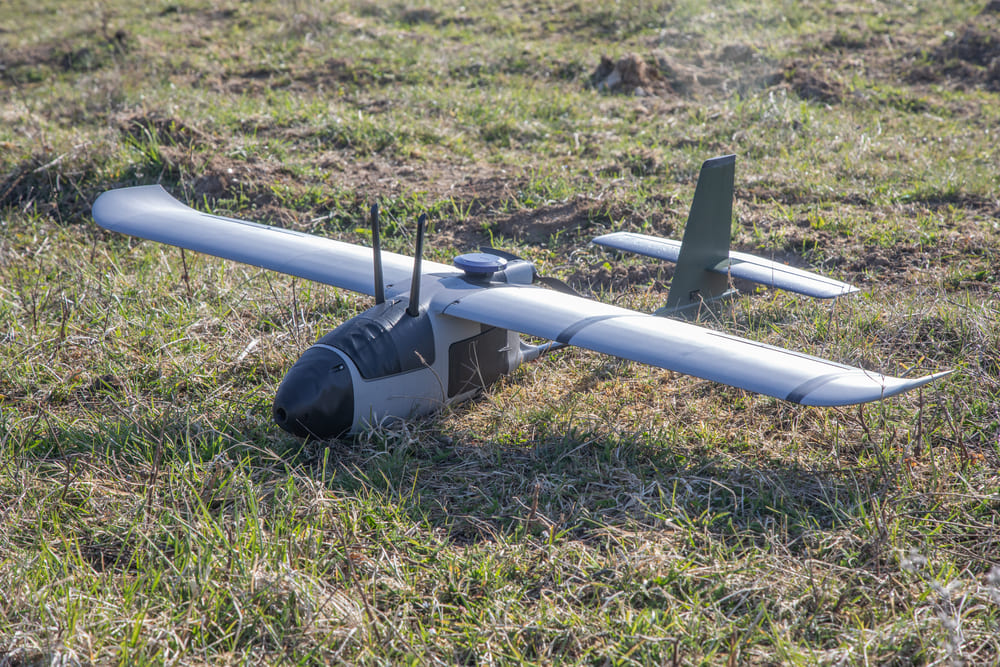
The Army aims to turn its organic base into a distributed network that builds small drones by the tens of thousands per month. Leaders set a near-term stretch goal of 10,000. The plan leans on additive manufacturing, faster tooling, and a parts chain that excludes foreign-made components. The challenge is scale-sequencing motors, batteries, wiring, software, training, and money so output actually moves.
“UAS, they are different,” Lt. Gen. Christopher Mohan said, noting shortfalls in brushless motors and other parts. Rock Island can print bodies and frames today. High-reliability motor lines and power packs still need volume. That is where the SkyFoundry concept fits: a network that splits work across depots and arsenals, shares digital tech data, and pushes final assembly to a site sized for throughput.
“Hair on fire” was not a figure of speech, Brig. Gen. Beth Behn said after months on the Ukraine mission. “We have got to adapt.” The Army launched operator courses, backed pilot builds, and sent early hardware to Transformation in Contact formations. Officials say those lines now tie into a broader push to field thousands for training and experimentation as production cells arrive.
Rock Island Additive Manufacturing and Digital Repository
Rock Island Arsenal invested in printers that turn out composite and metal airframes. Next up is composite-based equipment from Impossible Objects. Plans call for capacity near 120,000 airframes per year from that line. Leaders say a single cell can support roughly 60 small airframes per hour, pushing printed shells below $100. Those figures cover structures and other printed parts, not complete systems. Bottlenecks shift to motors, batteries, electronics, and test.
Col. Eloy Martinez expects installation in late winter or early spring, pending contract closure. Lead times for several machines run about eight months, according to industry sources. This is not a single factory ribbon-cutting; it is a sequence of cells coming online at multiple posts.
A government-owned digital repository sits at the center. CAD models, print parameters, firmware baselines, wiring diagrams, and test procedures live in controlled libraries. Mohan put it simply: “We’ve got to have this digital repository … and we have to own the tech data.” Ownership enables version control, origin compliance, and fast part swaps when a supplier slips.
Near-term targets are group-1 expendables – hand-launched and FPV-style aircraft. The Army wants airframes that units can lose in combat without hesitation, with modular wiring and open bays for swappable payloads. The service is avoiding bespoke airframes for now, favoring commercial-like builds it can revise month to month.
Depot Work Split Across Tobyhanna, Red River, and Blue Grass
Work divides across sites. Rock Island prints airframes, propellers, and structural parts. Tobyhanna Army Depot takes brushless motor winding, microelectronics, and harness production. Red River Army Depot handles batteries, final assembly, and test. Blue Grass Army Depot serves as a UAS innovation center that folds in AI-enabled security projects and special operations work already on hand. The layout reduces single points of failure and lets each location specialize.
Logistics also count. Moving bare airframes and subassemblies between posts is easier than shipping finished systems that trigger hazmat rules for lithium packs. Red River sits near a lithium deposit, a detail that could support upstream battery suppliers if policy and industry interest align. Officials emphasize domestic content and shorter transport legs for heavy items, not only cost.
Tobyhanna’s role closes a gap that appears at scale. FPV motors seem simple until a thousand must match thrust curves, pass burn-in, and survive dust and heat. Depot-grade inspection holds failure rates down and generates data for life-cycle choices. The wiring shop matters too. Units can solder in the field; they should not be re-crimping connectors across a fleet.
Blue Grass captures soldier feedback without disrupting production. Payload fits, autonomy updates, and digital-thread changes can be refined there, then pushed across the repository to print and assembly lines. Done right, the network absorbs new ESCs, radios, and interlocks in weeks, with configuration held tight.
Costs, Timelines and Component Sourcing Challenges
Leaders price the initial push to reach a 10,000-per-month rate at about $197 million, including roughly $75 million for motors and wiring capability. About $150 million per year across the next three years would sustain and expand the effort. Those figures fund machines, fixtures, QA stands, and people, not the full value of every drone that later moves through the line. “As soon as we get a budget, we will order that machinery,” Mohan said, pointing to the eight-month lead time on key equipment.
Sourcing rules and security policies drive the program. Mohan put a stark number on the market: “Ninety percent of UAS parts are coming out of China and Taiwan.” The Army says SkyFoundry output will exclude Chinese-made parts. That complicates bills of material for ESCs, cameras, radio modules, and some magnets. Substitutions follow even when commercial equivalents are cheaper. The trade favors predictable supply under stress.
Lawmakers signaled support through bills that would formalize government-owned production at Red River and envision output in the hundreds of thousands per year once fully tooled. The legislation has not passed. The broad outline matches the Army plan, a government-run base for expendable drones that can host industry payloads and software. Officials confirm the policy push aligns with service planning.
Department guidance this summer set aggressive expectations on small UAS. Acquisition leaders spoke about buying in ways that reduce steps and shorten time to field. SkyFoundry pairs with that only if ordering and funding arrive cleanly and the line accepts demand without constant re-approvals. According to industry sources, staffing for winding and test technicians remains a watch item in several regions because commercial e-mobility plants hire from the same pool.
Training Deployments and Indo-Pacific Field Tests
Early lots go first to training centers. Shipments are slated for the National Training Center and the Joint Readiness Training Center, plus units that have not had funds to fly. The first 50 systems will go to I Corps at Joint Base Lewis-McChord. That sequence builds operators and maintainers while the network finishes tooling and ramps subassemblies. Officials confirm a feedback loop between training units and the Blue Grass cell before wider fielding.
Field experiments show how printed airframes move into use. At TechNet Indo-Pacific this week, the 25th Infantry Division described a 3D-printed FPV paired to an EOD-designed detonation system. “They can put lethal effects on target right now,” Capt. David Velasquez said. Theater leaders tied the method to distance problems in INDOPACOM, where printers, spares, and known CAD models cut waiting time across long supply lines.
Activity runs beyond the Pacific. Teams validate assembly guides, test harness jigs, and collect motor burn-in data that feed Tobyhanna’s process. The work looks ordinary and needs to be. Scale depends on fixtures, calibration logs, and people trained to catch faults before pallets ship.
Industry remains integral. Even with printed bodies and in-house motors, the line relies on optics, radios, and compute modules that meet security rules. Several vendors are requalifying parts to clear component-origin restrictions and to harden software supply chains. According to industry sources, camera modules and motor magnets remain the toughest items, with delivery dates shifting alongside consumer demand. Common test protocols and the repository validate alternates faster when substitutions are required.
“We are on the cusp of an accelerated sprint on UAS production,” said Greg Lupton, Rock Island’s deputy commander. Behn’s urgency stands. Mohan’s push to own the tech data sets the tone. Officials confirm the first wave prioritizes training and experimentation. Units will fly, crash, fix, and repeat until tactics and maintenance catch up to the flow of hardware. Our analysis shows the network succeeds if the tech-data hub stays disciplined, hiring keeps pace, and redesign churn stays low – the decisive point comes when motors, batteries, and harnesses hit the line at the same tempo as shells.
REFERENCE SOURCES
- https://www.defensenews.com/land/2025/10/15/armys-big-drone-ambition-runs-into-the-hard-part-scaling-up/
- https://www.defensenews.com/land/2025/10/15/printing-with-sand-how-rock-island-arsenal-keeps-army-gear-humming/
- https://breakingdefense.com/2025/10/armys-new-3d-printed-fpv-drone-can-put-lethal-effects-on-target-right-now/
- https://defensescoop.com/2025/10/16/army-drone-acquistion-small-uas-brent-ingraham-hegseth-ausa/
- https://www.cruz.senate.gov/newsroom/press-releases/sen-cruz-introduces-bill-to-establish-drone-manufacturing-in-texarkana
- https://www.ksla.com/2025/07/30/red-river-army-depot-begin-manufacturing-drones-department-defense/
- https://www.army.mil/article/285689/ria_jmtc_leads_the_charge_in_3d_printed_drone_production_uniting_the_organic_industrial_base_for_future_warfare
- https://www.washingtontimes.com/news/2025/oct/14/threat-status-drones-unleased-inside-armys-mission-3d-print-drones/
- https://defensescoop.com/2025/07/10/hegseth-memo-unleashing-us-military-drone-dominance-deadlines/