An interceptor that works costs more than the thing it destroys, and there are fewer of them than anyone would like. That exchange ratio has become the organizing problem of modern weapons development. A one-way attack drone assembled for a few tens of thousands of dollars can force the launch of a missile costing several million, and no magazine survives that trade for long.
This section covers the effectors and the software around them. Missiles and munitions, unmanned systems, air and missile defense, electronic warfare, cyber, lasers and high-power microwave, autonomy, propulsion, and the mission software that decides how quickly any of it can be changed.
Demonstrations are treated as demonstrations. A laser that shot down a drone on a range in good weather is not a fielded capability, and coverage says which one it is.
Production rate matters as much as performance. A weapon nobody can build at scale is a briefing slide.
Tenix Defence Systems has signed the follow-on contract that moves its Radio-Frequency Photonic Link research into full pre-production. The award covers “Phase 2 of Task 1” under Project Arrangement 10 (PA10), a joint Australia–United States framework that backs advanced self-protection techniques for
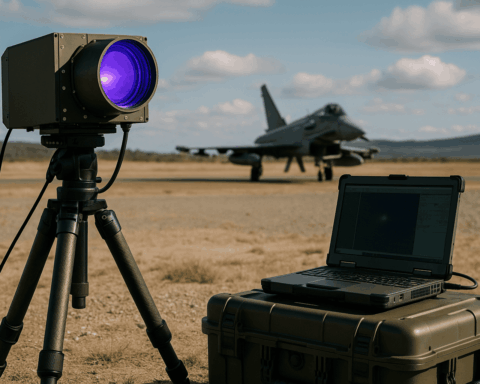
Ian Will, Manager of Electro-optic EW Systems at Tenix Defence Systems, confirmed today that a foreign customer has placed an order for three Mallina long-range ultraviolet stimulators. Each unit will ship from the company’s Welshpool facility before the end of the calendar
Missiles / Drones / Directed Energy carries the effectors: cruise and ballistic weapons, loitering munitions, unmanned systems, and the lasers and high-power microwave now being fielded against them. What all of it is aimed at, and what shoots it down, is in Air & Missile Defense Systems.