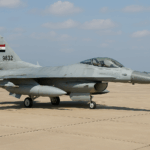
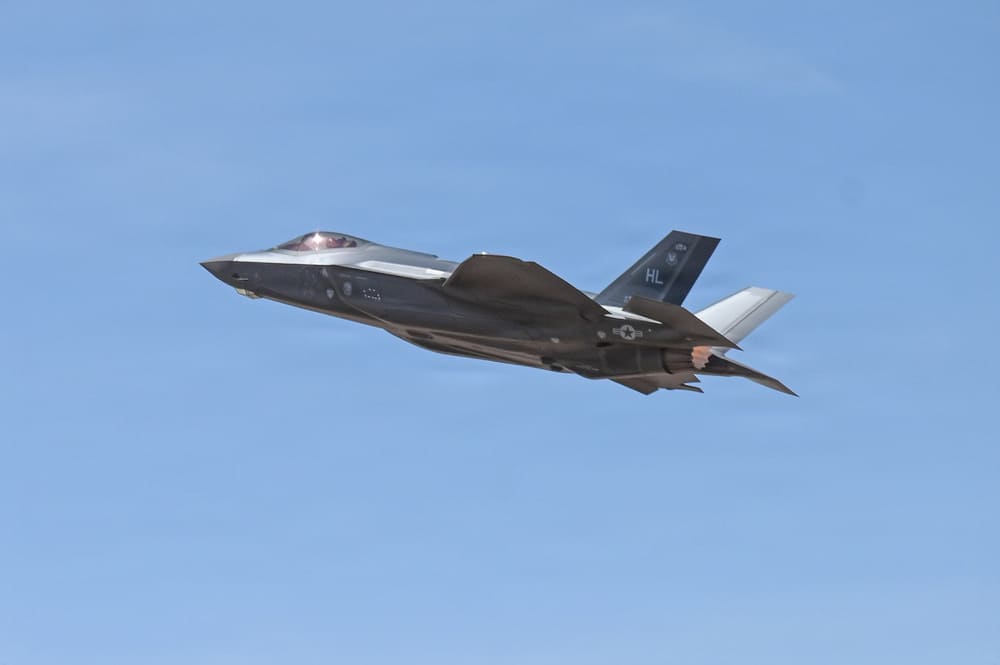
Marine Fighter Attack Squadron 542 closed its first long F-35B combat tour in October with 1,099 sorties and 4,736 flight hours. NORAD pushed a mixed F-35 and F-16 package to Pituffik Space Base in Greenland from Oct. 7–11 to validate an Arctic surge.
Belgium received its first F-35A at Florennes Air Base. Germany put forward a plan to add 15 jets to its program. The Netherlands started a three-week advanced employment block in the United States, and Finland rolled out airframe JF-501 in Texas.
NATO’s new Combined Air Operations Centre in Bodø opened on Oct. 10 to manage a larger northern air picture.
Program briefings detailed the cooling increases tied to Block 4 and follow-on systems, and Skunk Works showed its survivable CCA concept, Vectis.
Officials confirm these items, taken together, mark a busy three-week period for both operations and modernization.
VMFA-542 Combat Deployment Results
VMFA-542’s five-month rotation under U.S. Central Command produced 1,099 combat sorties and more than 4,700 hours without a mishap. Mission sets covered close air support, armed overwatch, and defensive counter-air for joint and partner forces. Officials confirm the squadron held a strong mission-capable rate across the tour. Planning notes cite standard weapons loads, tight debrief cycles, and rapid turnarounds that kept jets cycling during air tasking surges.
LtCol Carlo F. Bonci, the executive officer, said: “VMFA-542’s historic deployment has set new benchmarks for Marine Corps aviation, demonstrating that a forward deployed F-35B squadron can deliver unmatched combat power and readiness while seamlessly integrating with Joint Forces during a major regional crisis.”
Imagery and video released by the wing during the homecoming showed the return to MCAS Cherry Point, maintenance turnarounds on the line, and aircrew debriefs. Those materials match the period’s sortie totals and help fix dates on the last week of operations. Maintenance chiefs who spoke on the record emphasized repeatable procedures and parts availability, not any single hardware change. According to operational officials, the unit held up in heat, dust and heavy schedules without losing the ability to meet taskings on short notice.
One point keeps coming up when aircrew break down what worked. The B-model’s sensor fusion and data-link discipline reduced cockpit management load in complex stacks. Pilots did not describe a magic trick. They talked about knowing who owned which part of the problem, where the threats were, and when to hand off to another shooter or a surface element. That reads mundane at first glance. It matters when every minute in a crowded airspace system brings another targeting change or a new deconfliction thread.
Arctic Surge and NATO Bodø Operations Centre
NORAD’s October movement into Pituffik Space Base put F-35s, F-16s, and KC-135 tankers on the ground in Greenland on short notice. The goal was clear: practice the deployment schedule, test base support, and connect with Danish defense authorities in a live environment. Weather, distance, and comms in the high north do not forgive sloppy planning. Officials confirm the force flew local missions and exercised alert procedures during the Oct. 7–11 window.
A parallel change in command-and-control came that same week. NATO opened the Combined Air Operations Centre in Bodø on Oct. 10. The facility assumes duties across the Nordic region, the Baltic approaches, parts of the North Atlantic, and the Barents. It links directly into national air-defense networks in Norway, Sweden, Finland, and Denmark. That wiring matters because Norway already holds quick-reaction alert, and the Baltic and Arctic arcs now see more drone and bomber activity that demands fast, clean tasking.
The Pituffik evolution served as a real check on tanker lines, staging, and communications in the worst geography on the map. The package had to coordinate through Danish command channels and then work under a broader NATO umbrella. Cold-weather ground operations, hangar and de-icing procedures, and navigation aids under low-visibility conditions all received attention. No one reported record numbers or headline-grabbing intercepts. The purpose was to find seams. According to officials, the seams they found are getting closed through updates to checklists, local support contracts, and comms routing between national and alliance nodes.
The Bodø CAOC change anchors those fixes. A single center for tasking and deconfliction cuts latency when multiple QRA elements operate across long distances. It also gives the alliance greater flexibility to shift missions from national to NATO control when traffic spikes. For F-35 units, that means fewer conflicting messages on datalinks and quicker resolution when airspace turns busy over the Greenland-Iceland-UK gap or the Norwegian Sea.
European F-35 Fleet Expansion and Training
Belgium reached in-country basing in mid-October when the first F-35A landed at Florennes Air Base. Until now, pilots trained abroad and aircraft lived at U.S. sites. The arrival flips the program into a new phase focused on local infrastructure, ground crew operations, and the first squadron’s conversion. The air base upgrades include shelters, security, and mission-support facilities that align with the aircraft’s classified systems. Belgian officials outlined an approach that keeps training pipelines running during home-station standup.
Germany signaled intent on Oct. 20 to buy 15 more F-35As at an estimated €2.5 billion, bringing the planned fleet to 50 if the move clears the budget process. The expansion would add capacity for the nuclear-sharing mission and conventional strike, and it would give the Luftwaffe more depth as Tornado retirements gather pace. The existing program already includes runway changes and weapons-integration work scheduled for the mid-to-late 2020s. Officials confirm the additional aircraft plan slots into those schedules without a major change to infrastructure spend.
The Netherlands sent 12 F-35As to Mountain Home AFB for three weeks of advanced training announced on Oct. 29. The focus centers on NATO air defense under high-end conditions. Large-force events, contested electromagnetics, and rigorous debrief standards anchor the syllabus. A Multinational MRTT Fleet aircraft supported the Atlantic crossing, which also expands crew experience in long-range deployments. Dutch planners keep stressing continuity: the aircraft must fight well as part of a team, and that means common tactics, standards, and comms procedures across nations.
Finland’s first airframe, JF-501, rolled out at Fort Worth at the end of October and now moves to paint and acceptance work. The program plans deliveries beginning in the second half of 2026. Initial jets will base in the United States for training before airframes move to Rovaniemi and Rissala. The rollout signals a program that has stayed on schedule since contract award. The airframe exists, the crews are in training, and the sites at home are preparing to take jets.
Each of these European threads shows a different stage of the same adoption arc. Belgium passed the political and industrial milestones and now faces day-to-day operations. Germany is expanding its planned buy to meet mission load. The Netherlands is pushing experienced crews through harder scenarios. Finland is moving from factory floor to squadron life. According to industry sources close to sustainment planning, the staggered phasing helps because it spreads demand for instructors, spares, and simulators across the region instead of spiking everything at once.
TR-3, Block 4 Thermal Capacity and Vectis CCA Development
Modernization work in late October put numbers on the F-35’s thermal growth plan. Program officials and suppliers described a step from roughly 32 kW of available cooling today to a range between 62 and 80 kW as Block 4 sensors, processors, and electronic warfare features mature. The idea is not to rip up aircraft that already fly. It is to add capacity in stages so the jet can power and cool new loads as software unlocks capability. Jim Currier, who leads Honeywell’s aerospace business, framed the staged approach this way: a software-only bump to about 40 kW in the near term, then scaling to 80 kW on mostly common hardware. “None of the interfaces change in the PTMS system. None of the bracketry changes… so it’s a rather straightforward upgrade,” he said.
That upgrade pairs with TR-3, the computing backbone that carries Block 4 features. Air forces want capability, but they do not want a maintenance shock. A staged thermal upgrade under stable interfaces reduces risk during avionics growth. The approach also matters for export customers, since it keeps downtime manageable during retrofit and preserves commonality in training and spares. Officials confirm the program is sequencing software loads and hardware kits to keep aircraft available during sensor and weapons integration.
Skunk Works unveiled “Vectis,” a survivable collaborative combat aircraft sized for long endurance and flexible payloads. The design targets a reusable concept rather than a single-use cruise. OJ Sanchez, the Skunk Works vice president and general manager, described the development pace: “Prototype parts are ordered, the team is in work, and we intend to fly in the next two years.” He also sketched how the aircraft will be tasked. “If you put [weapons] on a CCA you need to get those munitions off and into the fight, so being able to survive and protect the weapons and deliver the weapons, […] then Vectis will be multi-role, whether it be air-to-air or surface or in an ISR persistent targeting role.”
Two-ship F-35 elements often split roles between sensors and weapons, or between trail and lead for airspace management. A CCA adds another node that can carry risk, stay on station longer, or push into a threat ring during crewed aircraft hold outside. According to officials involved in test planning, near-term work stays focused on communication architectures, control laws, and tactics that keep the pilot’s workload stable when one or more uncrewed aircraft fly in support. That discipline matches the message pilots brought home from CENTCOM: information quality and timing make the biggest difference in the cockpit.
Higher-power sensors and processors need thermal headroom. A program that offers more compute and better electronic warfare needs an upgrade kit that maintainers can install without months of downtime. Suppliers are arguing they can do that under stable mounting points and connections, plus software steps that deliver mid-term gains before the full hardware package arrives. Operators like the sound of that because the jet is busy. Belgium just brought the aircraft home. Germany is trying to grow its order. The Netherlands, Norway, Denmark, Italy and others cycle deployments and training blocks. Finland is moving from rollout to delivery. A disruptive retrofit would put pressure on schedules across the region.
If the CCA meets its survivability goals and holds a useful payload, crews will have a tool that extends the reach of the fifth-generation fleet and reduces risk to pilots on certain tasks. The air vehicle still needs to prove how it handles autonomy under jamming, how it recovers from datalink issues, and how sustainment plays out when you scale beyond a few prototypes. Those are test points for the next two years. According to industry sources, the immediate priority is a build that uses open mission systems and standard interfaces so the aircraft can plug into command architectures that F-35 operators already use.
REFERENCE SOURCES
- https://www.2ndmaw.marines.mil/News/Article-View/Article/4324290/marine-fighter-attack-squadron-542-returns-from-historic-deployment-with-f-35b/
- https://www.dvidshub.net/news/550522/norad-coordinates-dynamic-operational-exercise-with-danish-forces-greenland
- https://www.airandspaceforces.com/f-35s-f-16s-norad-greenland-exercise/
- https://defence-industry.eu/nato-opens-new-combined-air-operations-centre-in-bodo-to-strengthen-defence-across-high-north-and-arctic/
- https://www.highnorthnews.com/en/natos-new-air-operations-center-opened-officially-part-alliances-command
- https://news.lockheedmartin.com/2025-10-14-Lockheed-Martin-and-Belgium-Celebrate-Arrival-of-First-Belgian-F-35-Aircraft
- https://www.reuters.com/business/aerospace-defense/germany-plans-order-15-more-us-made-f-35-jets-der-spiegel-reports-2025-10-20/
- https://www.defensie.nl/actueel/nieuws/2025/10/29/f-35s-naar-verenigde-staten-om-verdediging-navo-verdragsgebied-te-trainen
- https://theaviationist.com/2025/10/29/finlands-first-f-35a-rolls-out/
- https://breakingdefense.com/2025/10/the-low-risk-way-to-give-the-f-35-more-cooling-for-advanced-avionics-without-starting-over/
- https://breakingdefense.com/2025/09/lockheeds-skunk-works-reveals-vectis-stealth-drone-eyeing-first-flight-in-2027/