Six US Navy EA-18G Growler jets sat on the ramp today. They parked at the former Naval Station Roosevelt Roads in Ceiba, Puerto Rico. The detachment arrived during a wider US force push across the Caribbean. Senior defense leaders tie it to counter-narcotics work and sanctions enforcement. Tail markings and open-source imagery point to Electronic Attack Squadron 132, VAQ-132, from NAS Whidbey Island. Some jets carry the AN/ALQ-249(V)1 Next Generation Jammer Mid Band pods. Others fly with older AN/ALQ-99 pods.
Ground crews started quick inspections and pod checks after the jets shut down. The Navy has not released a public statement on the detachment’s mission.
EA-18G Growlers forward deployed at Roosevelt Roads Puerto Rico
Public flight tracking and airfield activity reports showed US Air Force tankers supported the ferry flight. The Growlers reached Ceiba late on Dec. 9. Photographers captured them parked in a tight line near power carts and maintenance gear. The Navy has not issued a detailed detachment statement this afternoon. Six aircraft match a standard deployed Growler package.
VAQ-132 normally operates from Whidbey Island and deploys aboard carriers or from land bases. A six-jet lineup gives crews enough aircraft for a steady sortie rhythm. It also leaves room for maintenance downtime without stopping flights. The unit can split jets across tasking and still keep spares available. That balance matters for electronic attack sorties that often run longer.
The Roosevelt Roads complex now operates as Jose Aponte de la Torre Airport. The military still uses parts of the old naval station. The runway and ramp support sustained fighter operations. Ceiba gives fast access to the Windward Passage and eastern Caribbean sea lanes. It also shortens routes toward northern South America.
Satellite imagery and on-the-ground photos since September show fresh pavement at the airfield. New lighting and expanded staging areas sit around the old ramp. Other airports in Puerto Rico and the US Virgin Islands show similar work. Forces can stage aircraft, fuel, and maintenance gear closer to the southern Caribbean.
Land basing changes how the squadron schedules sorties. Crews can fly and recover without deck-cycle pressure. Maintenance teams keep pods on aircraft longer and run deeper checks. More space for spares and test gear helps, especially for jamming pods.
A Growler detachment carries a heavier support burden than most fighters. The unit needs planning spaces for electronic warfare mission data. It also needs secure storage for sensitive files. Technicians must test pod functions and troubleshoot faults. The squadron needs reliable links for mission uploads and downloads. According to industry sources, mixed NGJ and ALQ-99 loads increase spares and test sets.
Ceiba has supported more aircraft than just fighters this fall. Tankers and transports have used Puerto Rico for staging and sustainment. Aviation notices have shown more military activity blocks over recent months. Those notices do not confirm a specific operation. They show the airfield now sits inside a routine operating pattern.
AN ALQ 249 Next Generation Jammer Mid Band pods arrive with the detachment
Images from Ceiba show some jets carry AN/ALQ-249(V)1 pods under the wings. Other aircraft in the group carry AN/ALQ-99 pods. The Navy fields NGJ in phases, so deployed squadrons often mix pods. It looks uneven on the ramp, but it matches the fleet transition.
A Pentagon test and evaluation report describes NGJ Mid Band performance. It cites “increased jamming capability at higher power and longer ranges than the AN/ALQ-99 Tactical Jammer System”. The report also notes quicker hardware and software updates. Modern radars hop frequencies faster than older sets. Higher power and faster updates help crews keep pace.
A Navy fact file describes NGJ Mid Band as part of a three-increment program. It pairs mid-band development with planned low-band and high-band efforts. The program also involves cooperation with Australia’s defense ministry. That cooperation covers work on hardware, testing, and long-term fielding plans. The Navy still treats NGJ as a fleetwide modernization effort, not a niche add-on.
The mid-band increment targets frequencies where many surveillance and fire-control radars operate. It aims to deny or degrade enemy use of the spectrum. Friendly forces still need access for their own sensors and comms. Mission planning therefore focuses on deconfliction as much as raw power. Crews must keep friendly datalinks and radios clear.
The ALQ-99 still performs many missions and remains in service on carriers. It uses external pods with a ram air turbine generator. Modular transmitter sections sit inside each pod. The Growler can carry up to five pods. Crews still train on ALQ-99, even as NGJ grows.
A mixed pod load in Puerto Rico gives options across different emitter sets. ALQ-99 remains useful against many conventional radars and communications nodes. NGJ adds more reach and higher power for tougher targets. It can also refresh faster when threat libraries change. A small forward unit can cover more tasking without long-distance swaps.
Electronic attack hinges on software and mission data. Crews load threat libraries and tune plans to the local spectrum environment. They coordinate with friendly aircraft so jamming does not block allied sensors. A land base helps, since crews can update mission files between sorties. A forward site also supports faster feedback after each flight.
The Growler also carries the AN/ALQ-218 receiver system. It detects and locates hostile emitters and records signal details. Analysts use that data for later exploitation and mission planning. Forward basing cuts the time between collection and analysis. That matters when operators change modes and frequencies.
EA-18G Growler electronic attack roles in Caribbean operations
A Navy fact file lists common EA-18G stores and weapons. They include AIM-120 missiles, AGM-88 HARM, external tanks, and pods. The mix lets the aircraft escort strikes, jam radars, and attack emitters. AGM-88 remains a standard tool for suppression of enemy air defenses. Planners use it when aircraft must operate closer to defended targets.
A Growler crew also brings a two-seat cockpit built for complex missions. The electronic warfare officer manages sensors, jamming assignments, and threat reactions. The pilot focuses on formation position and flight safety. That division helps during long sorties where crews track many emitters. It also supports rapid changes when the threat picture shifts.
Growler support also fits missions beyond classic strike packages. Special operations insertions often rely on helicopters and tiltrotors at low altitude. Jamming can disrupt early warning and fire-control radars along the route. Combat search and rescue also benefits from that cover. Rescue forces need time to locate crews and keep threats from cueing.
Puerto Rico’s position helps sustain those mission types across the region. A Growler can reach the southern Caribbean quickly. Tankers can extend time on station. Crews can recover at Ceiba without an hours-long transit to the mainland. That improves coverage for forces afloat and ashore.
Open-source assessments describe Venezuela’s air defenses as layered and mixed. They list long-range S-300VM and medium-range Buk M2 systems. Modernized S-125 Pechora systems and short-range weapons add depth. Ground radars and command nodes link those pieces to varying degrees. Operators can also move some systems to cover likely approach corridors.
Overwater routes into northern South America limit terrain masking. Coastal radars can cover large arcs across the Caribbean. Mobile missile units can reposition where geography funnels traffic. Jamming and deception can reduce radar performance and complicate tracking. That matters for aircraft that launch stand-off weapons and for those that fly closer.
Signals collection also plays a central role. A Growler can record radar behavior, bands, and responses under jamming. Analysts fold that into an electronic order of battle. They can link emitters to units and likely locations. The result supports route selection, timing, and stand-off weapon choices.
The Navy has not tied this move to a single contingency. The service has not signaled an imminent strike order. The mission set aligns more with contested airspace planning than routine patrol. Counter-drug operations can use fighters for presence and rapid response. They rarely require dedicated jamming aircraft forward on an island airfield.
Venezuela tensions, USS Gerald R Ford and Skipper tanker seizure
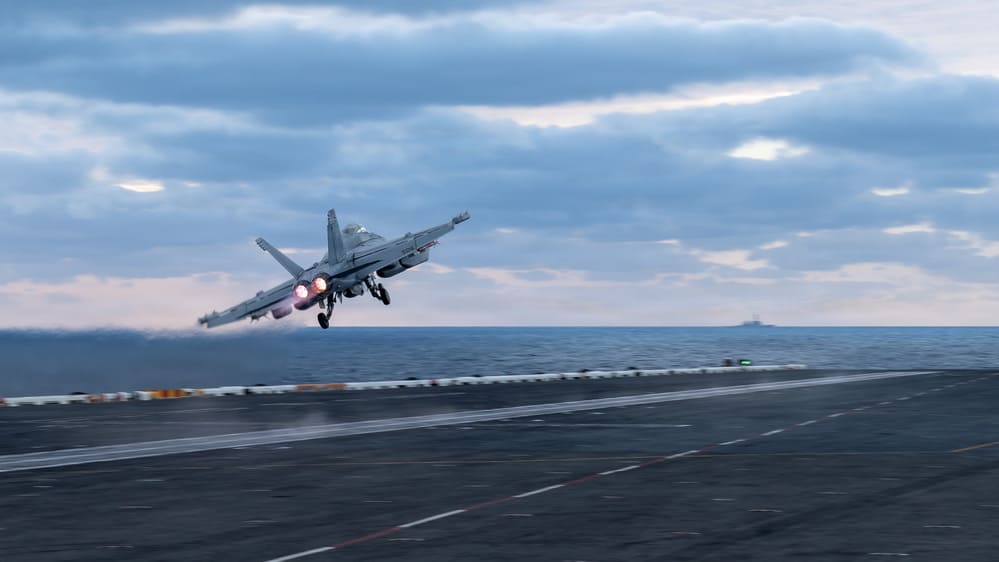
US Southern Command confirmed the USS Gerald R. Ford entered the Caribbean Sea on Nov. 16. The carrier air wing includes an EA-18G squadron. Imagery from late November shows Growlers launching from Ford’s deck. A shore detachment in Puerto Rico adds another Growler package to the area. The units can still fly separate tasking.
Observers saw five US F-35 stealth fighters land at Ceiba on Sept. 14. Sources said planners ordered up to 10 jets to the region. Helicopters, Osprey tiltrotors, and transports appeared around the airfield then. US Southern Command announced a new joint task force in early October. II Marine Expeditionary Force leads it. The task force links air, maritime, and ground assets rotating through the Caribbean.
The crude oil tanker M/T Skipper became the focal point for a separate action at sea today. President Donald Trump confirmed the seizure off Venezuela’s coast. He told reporters, “We’ve just seized a tanker off the coast of Venezuela”. Reporting ties the ship to sanctions evasion linked to Venezuelan and Iranian oil movements. Video released by federal officials shows personnel descending from a helicopter and securing the deck.
Publication on Nov. 24 put the Cartel de los Soles designation into effect under US law. US officials describe the group as a Venezuela-linked trafficking network. Venezuela’s government rejects the designation and calls the group fictitious. The legal framing now sits alongside a military posture beyond routine patrols. Defense officials confirm the US posture supports counter-narcotics missions, sanctions enforcement, and force protection.
Electronic attack squadrons remain limited across the fleet. Commanders do not often place them forward without a task for their equipment. A carrier provides strike aircraft and airborne early warning. It has limits on persistence and sortie count. A forward island base offers more staying power and faster turnarounds. It can also hold aircraft that do not need to return to a ship each night.
Our analysis shows Growlers in Puerto Rico now sit beside Growlers at sea. Stealth fighters at Ceiba round out the package for commanders. The posture does not declare an intent to strike. It reduces the time needed if senior leaders choose military pressure in the southern Caribbean.
REFERENCE SOURCES
- https://www.twz.com/air/navy-ea-18g-growlers-have-touched-down-in-puerto-rico
- https://www.reutersconnect.com/item/us-navy-ea-18g-growler-jets-are-parked-on-the-apron-at-the-former-roosevelt-roads-naval-base-in-ceiba/dGFnOnJldXRlcnMuY29tLDIwMjU6bmV3c21sX1JDMlBESUFVQjQyUA
- https://www.reuters.com/pictures/us-continues-massive-caribbean-military-buildup-venezuela-tensions-grow-2025-12-10/
- https://www.reuters.com/graphics/USA-CARIBBEAN/MILITARY-BUILDUP/egpbbnzyrpq/
- https://www.southcom.mil/MEDIA/NEWS-ARTICLES/Article/4332637/gerald-r-ford-carrier-strike-group-enters-caribbean-sea/
- https://www.dvidshub.net/image/9425252/vaq-142-flight-operations
- https://www.reuters.com/world/americas/us-deploying-stealth-fighter-jets-caribbean-drug-fight-tensions-with-venezuela-2025-09-05/
- https://www.southcom.mil/News/PressReleases/Article/4323046/new-joint-task-force-established-to-lead-southcom-counter-narcotics-operations/
- https://www.reuters.com/world/americas/trump-administration-seizes-oil-tanker-off-venezuela-coast-us-officials-say-2025-12-10/
- https://www.govinfo.gov/app/details/FR-2025-11-24/2025-20750
- https://www.navy.mil/Resources/Fact-Files/Display-FactFiles/Article/2166036/ea-18g-growler-airborne-electronic-attack-aircraft/
- https://www.navy.mil/Resources/Fact-Files/Display-FactFiles/Article/2395340/alq-99-tactical-jamming-system/
- https://www.navy.mil/Resources/Fact-Files/Display-FactFiles/Article/2395363/next-generation-jammer-mid-band/
- https://www.dote.osd.mil/Portals/97/pub/reports/FY2024/navy/2024ngj-mb.pdf?ver=E-qLV-ExMULW4Ho2E0Gvug%3D%3D
- https://www.dote.osd.mil/Portals/97/pub/reports/FY2024/navy/2024fa18ef_ea18g.pdf?ver=yNM-sefgV7ybsszH0Ii3Ag%3D%3D