
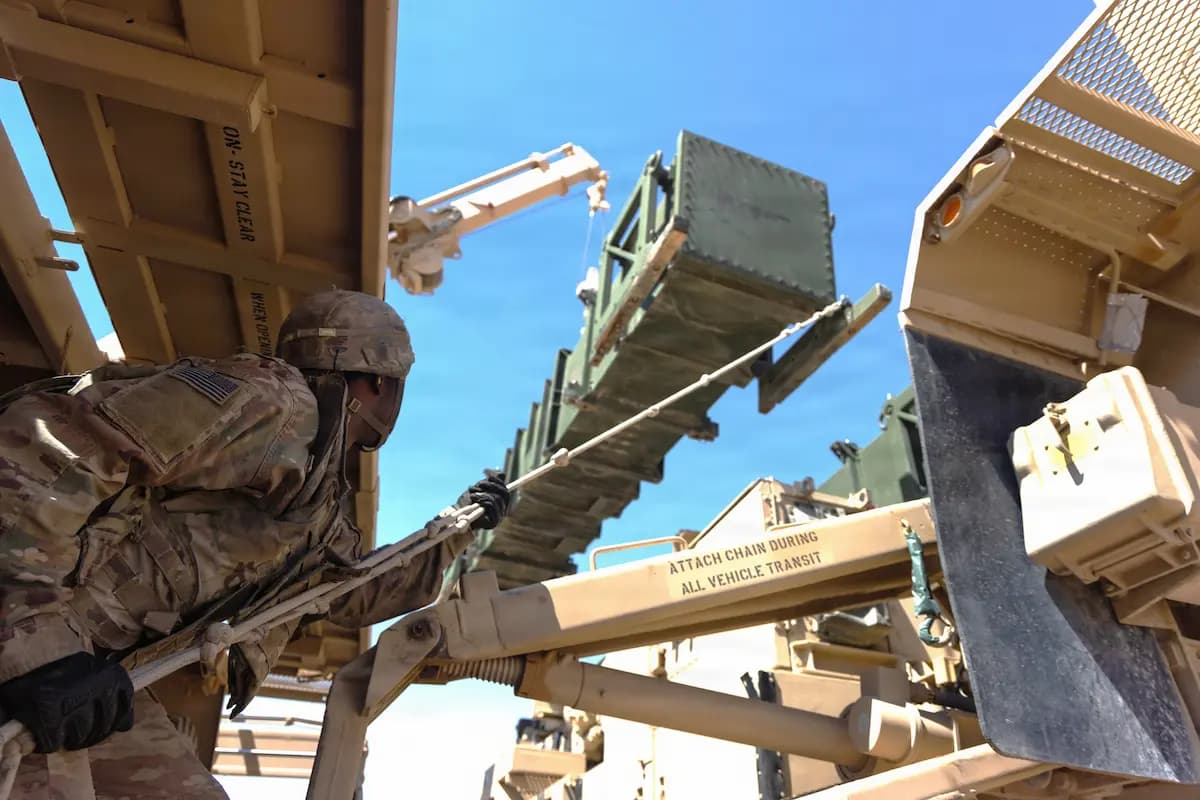
Operation Epic Fury began on 28 February 2026. The figures below were published between March and August 2026 and are attributed to the organisations that produced them. Where sources disagree, both numbers appear.
The US Army says it shot down more than 1,400 Iranian missiles and drones. Gulf Cooperation Council states were credited with more than 2,150 interceptions by 6 March, barely a week into the campaign. Both figures have been reported as describing Operation Epic Fury.
Neither is wrong. They count different things, over different periods, from different counters. Almost nobody publishing them says so.
That pattern runs through nearly every number attached to this war, and it matters more than any single figure. A procurement officer reading two assessments of interceptor depletion is not reading two views of the same data. They are reading two different datasets that share a name.
What is not disputed
US Central Command and Israeli forces began strikes on 28 February. The Department of War describes the objective as dismantling the Iranian security apparatus, prioritising targets it assessed as posing an imminent threat. Israel ran its side as Operation Roaring Lion.
A Department of War fact sheet covering the first ten days claims more than 5,000 targets struck and 50 Iranian vessels damaged or destroyed. CENTCOM later put combat missions over Iran at more than 6,000 in the first sixteen days. Iran retaliated within hours with ballistic missiles and drones against Gulf states, and the IRGC announced the closure of the Strait of Hormuz to US- and Israel-allied shipping.
Iran named its response Operation True Promise IV. Within 48 hours the exchange had touched Bahrain, Jordan, Kuwait, Qatar, Saudi Arabia, the UAE and Iraq, by one published account. Iranian claims about damage inflicted, like the coalition claims about targets destroyed, come from a party to the fighting and have not been independently verified.
Those are the participants’ own figures. No independent count of targets struck, on either side, has been published.
When it ended, in five answers
A Pakistan-brokered ceasefire took effect on 8 April. What happened after that depends entirely on which statement you treat as authoritative.
| Position | Date |
|---|---|
| Pakistan-brokered ceasefire takes effect | 8 Apr 2026 |
| Cessation of hostilities extended indefinitely | 21 Apr 2026 |
| War Powers letter describes hostilities as terminated | 1 May 2026 |
| Secretary of State calls the offensive stage concluded | 6 May 2026 |
| Exchanges across the Strait of Hormuz continue; at least one tracker still lists the conflict as paused, not ended | ongoing |
The interceptor counts, side by side
The most-cited work is a CSIS reconstruction by Mark Cancian and Chris Park, summarised by Defense News and CSIS itself. It puts the pre-war Patriot inventory at roughly 2,300 interceptors, about 1,030 at the April ceasefire, and between 759 and 827 by late July.
CNN, citing the same analysts, gives around 2,200 Patriots, specifying the two most-modernised variants, and 452 THAAD interceptors before the war. The Patriot figures are compatible. The THAAD figure is not.
| Pre-war THAAD inventory, as published | Figure |
|---|---|
| CSIS, via CNN — reconstruction from budget and procurement records | 452 |
| Congressional document cited by the Jerusalem Post, March | 632 |
Separately, the Payne Institute estimated roughly 198 THAAD interceptors fired in the first sixteen days, calling that about 40 percent of the inventory at the time. Run that same expenditure against each published denominator and the answer moves by thirteen points.
198 ÷ 632 = 31% Same expenditure figure. Two published inventories. Both percentages have circulated as the share of THAAD stocks consumed in the opening phase.
Cancian and Park are explicit about method, which is the part most coverage omits: their figures come from public budgets, procurement records, reported consumption, shelf-life assumptions and estimated training losses, not from classified inventories. One outlet that reproduced the numbers also carried that caveat and warned against treating either optimistic readiness claims or worst-case depletion narratives as established.
Interception rate against what
An account of the Qatar-based combined air defence cell published in March credits it with an interception rate above 90 percent against ballistic missiles. The congressional material cited by the Jerusalem Post gives a similar figure for THAAD.
Neither states the denominator. The 1,400 figure attributed to Lt. Gen. John Rafferty, reported by TWZ, covers US Army interceptions across Epic Fury and the earlier Twelve-Day War combined. The 2,150 figure covers GCC states to 6 March. A rate calculated against launches claimed by the attacking side and a rate calculated against impacts recorded on the ground are different measurements, and published accounts rarely specify which they used.
What is consistent across sources: some missiles got through, and penetrations produced casualties and base damage despite the layered defence.
The arithmetic that drives procurement
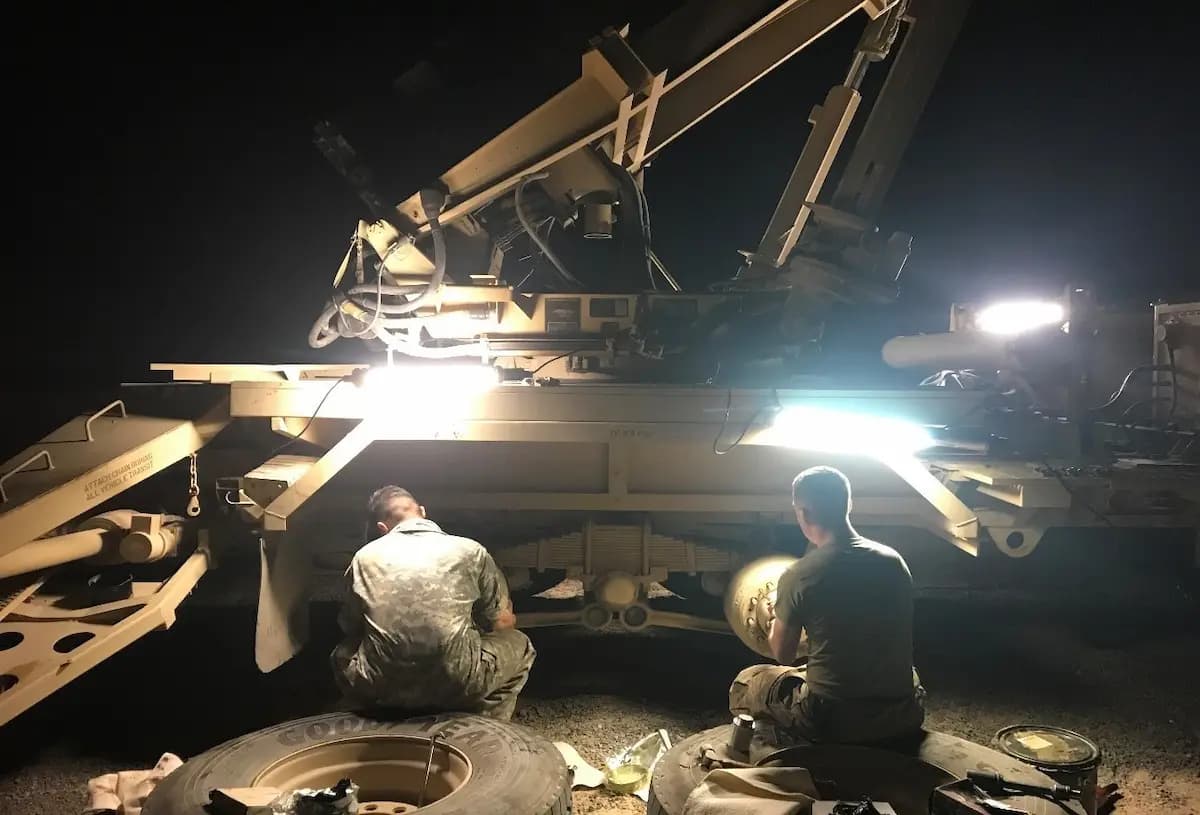
Cost per engagement is where the campaign’s procurement consequence sits. Published figures put a PAC-3 MSE at roughly $3.7 to $4 million and a THAAD interceptor at $13 million, though some assessments use $15.5 million for THAAD. Analyses of the exchange put a Shahed-136 at $20,000 to $50,000 to produce.
Replenishment is the harder number. Analysts told CNN that current delivery schedules yield roughly 20 Patriot interceptors and 15 Tomahawks a month. CSIS has estimated three or more years to rebuild THAAD stocks to pre-war levels, against a pre-war production rate of about 96 interceptors a year. The FY2027 request carries $95 billion for munitions and a further $21 billion in war supplemental, which is the clearest official acknowledgement of the problem so far.
What has not been published
No official stockpile figures. No per-system breakdown of interceptions. No independent count of Iranian launches. No declassified intelligence supporting the imminent-threat justification given for the timing of the opening strikes.
Until those exist, every depletion percentage in circulation is a reconstruction from budget documents, and the honest way to read them is as a range with a stated method attached. The FY2027 munitions lines are where the classified version of these numbers will first become visible, because a service that believes it has enough interceptors does not ask for $95 billion.
Three checks before citing any of these figures
- Ask what the number counts. Army interceptions, coalition interceptions and GCC national interceptions are three separate tallies, and a figure quoted without its counter is not comparable to anything.
- Ask which end date the author used. A percentage covering the war to 8 April and one covering the war to late July describe different conflicts, and the gap between them is most of the post-ceasefire expenditure.
- Ask where the denominator came from. Inventory figures in circulation are reconstructions from budget and procurement records. When two of them differ by 40 percent, at least one calculation built on top of them is wrong, and no published work so far identifies which.
Sources
- US Department of War — Operation Epic Fury, official spotlight page
- US Department of War — Fact sheet, the first 10 days (PDF)
- CSIS — Renewed Iran War Would Test Diminished Interceptor Inventories
- Defense News — Iran war depleted US Patriot missile stockpiles
- CNN — Nearly 80% of interceptors for a key missile defense system depleted
- The War Zone — Army Downed More Than 1,400 Iranian Missiles And Drones
- National Defense Magazine — Early air and missile defense observations from Epic Fury
- Jerusalem Post — US interceptor stockpiles depleted by Iran war
- Defence Security Asia — US Patriot interceptor stocks plunge an estimated 65%
- Payne Institute estimates, via Tech Times — US lacks missiles to safely sustain Iran air campaign
- GlobalSecurity.org — Iran’s missile campaign, Operation Epic Fury
- Quwa — Epic Fury and the Hormuz crisis
- MilitarySpend — Iran war timeline (modelled cost estimates, flagged as such by the publisher)
Launching_ceremony_2025-07-02-1-150x150.jpg)