The 2023 production baseline targeted the full-rate production decision for March 2025. The FY2027 budget projected it for August 2026. Along the way, the Air Force funded 36 of 50 production helicopters and declared the type’s initial operational capability for nuclear security.
- Full-rate production decision
- Projected August 2026; no public announcement found
- Initial operational capability
- Achieved August 10, 2026
- FY2026 two-aircraft lot
- Award forecast July 2026; no public announcement found
- H.R. 8800, FY2027 NDAA
- Not enacted
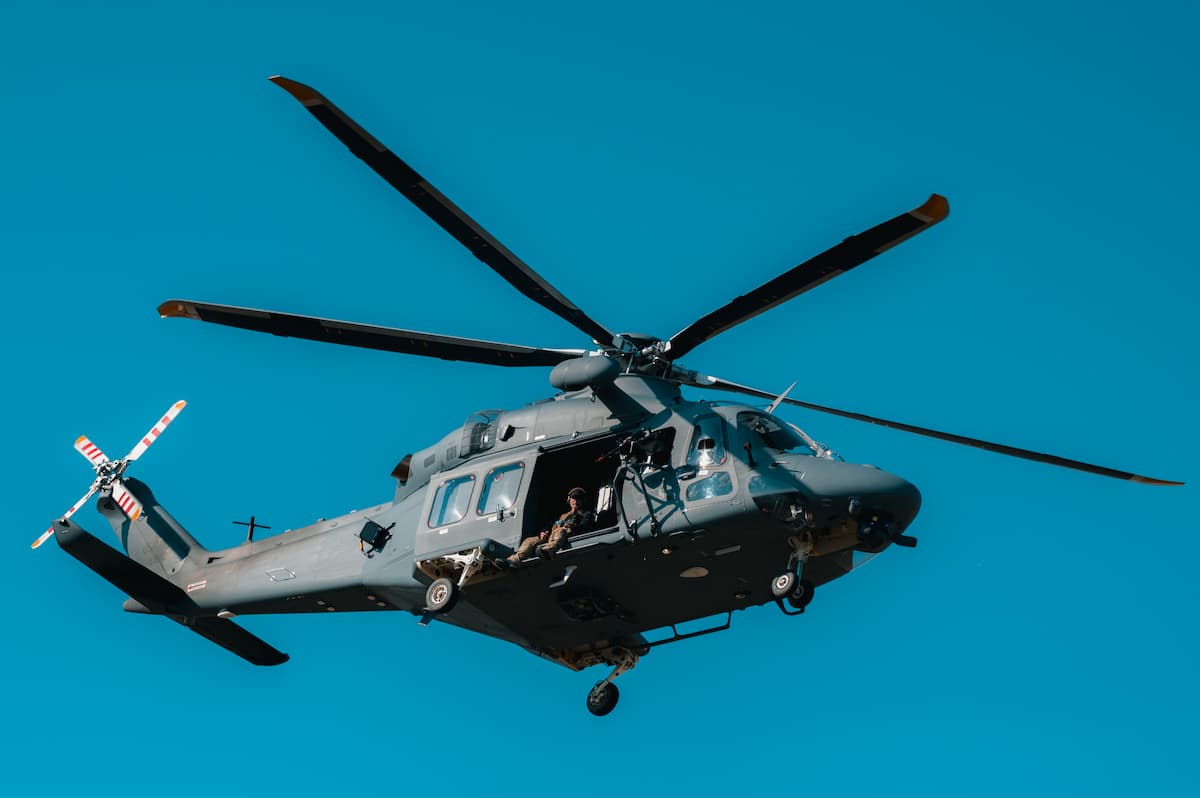
Air Force Global Strike Command said on August 31, 2026, that the MH-139A Grey Wolf achieved initial operational capability on August 10, marking the transition from the UH-1N Huey in the intercontinental ballistic missile security mission. IOC is not full operational capability, although at least one outlet described the helicopter as having become “fully operational.”
The Air Force’s fiscal 2027 budget justification, dated April 2026, projected two milestones for August 2026: IOC and full-rate production. Its wording is exact: “Projected Milestone Dates are as follows: Full Rate Production: August 2026; Initial Operational Capability: August 2026.” IOC came that month. The same budget book describes the fiscal 2027 buy as “the full-rate production lot of four (4) aircraft,” which means every production helicopter funded before it was bought ahead of that lot.
A decision that kept moving
| Source | Planned FRP decision |
|---|---|
| Production baseline approved March 3, 2023, as reported in the June 2024 Modernized Selected Acquisition Report | Objective March 2025; threshold February 2026 |
| Same report, current estimate as of June 2024 | July 1, 2025 |
| Original plan, as reported by Inside Defense | September 2025 |
| Revised for a delayed start of operational testing, per the same report; also the prior plan cited by GAO | November 2025 |
| Air Force spokesperson, as reported by Inside Defense on November 25, 2025 | January 2026 |
| DOT&E fiscal 2025 annual report | Second quarter of fiscal 2026 |
| GAO-26-108457, published July 2, 2026, program review dated January 2026 | April 2026 |
| FY2027 budget justification, April 2026 | August 2026 |
The explanations on record are procedural. In an article published November 25, 2025, an Air Force spokesperson told Inside Defense the adjustment “enables time for reporting IOT&E results” and producing required statutory and regulatory documentation. DOT&E said it would issue a classified operational test report in the second quarter of fiscal 2026 to inform the decision. GAO reported that deficiencies remained but that the Air Force did not expect further delays, and quantified the move from November 2025 to April 2026 as a delay of an additional five months.
What testing and oversight found
According to DOT&E, the Air Force Operational Test and Evaluation Center ran initial operational test and evaluation from January through June 2025. Testing had been due to begin in September 2024; Inside Defense reported, citing GAO, that it slipped to January after Boeing delivered contractually required training manuals and other maintenance data six months late. Preliminary data showed the MH-139A is faster, has longer endurance, supports longer-range missions and carries more security forces than the UH-1N. Testing also found concerns with the intercommunication system and the gun mount that required further testing; low availability and mission-capable rates, driven by long repair times tied to supply-chain problems; and engine restrictions against hovering or landing in dusty conditions.
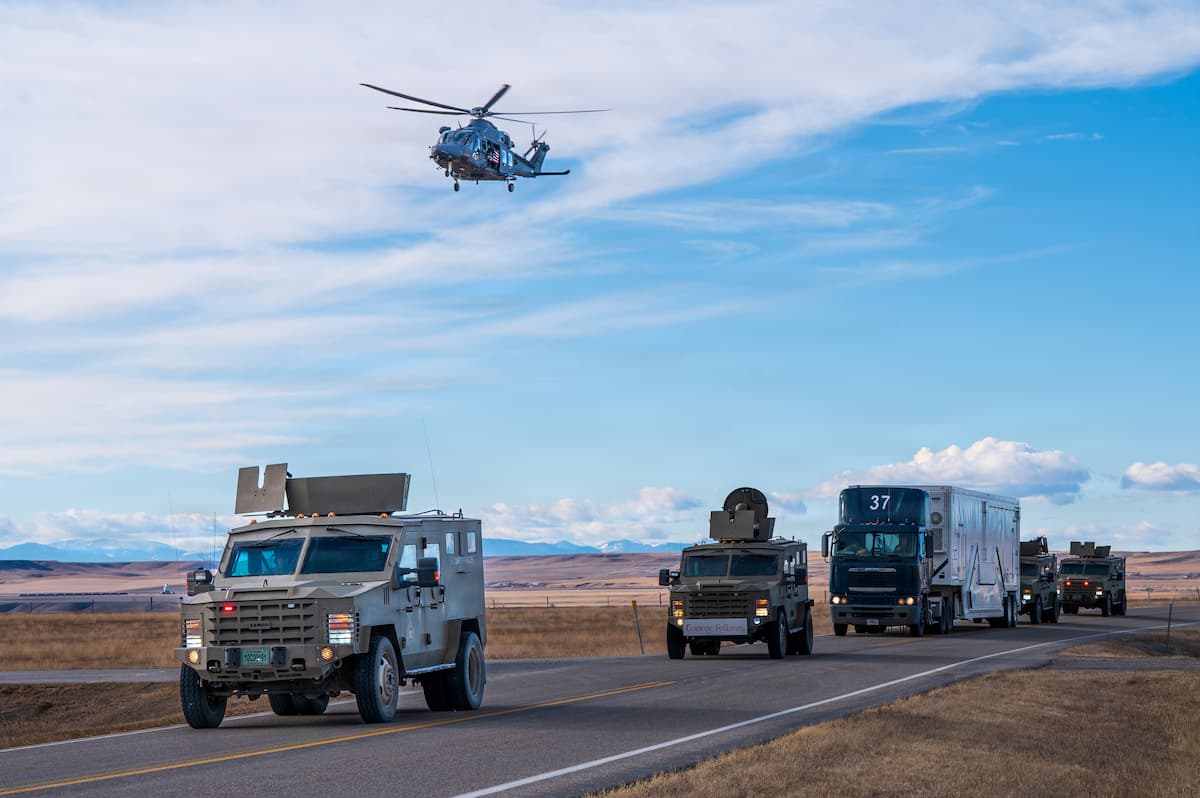
Footage from that test campaign is public. The 90th Missile Wing filmed the 550th Helicopter Squadron flying the aircraft through the Nuclear Convoy Course at Camp Guernsey, Wyoming, on April 15, 2025, and posted it to DVIDS.
GAO’s program assessment, based on a January 2026 review, reported that the Air Force accepted two aircraft to meet required assets available in June 2025 and received four more in December 2025. IOC was not achieved in September 2025 and was to be reevaluated in April 2026, which GAO counted as at least a 14-month delay against previous plans, attributed to low aircraft availability for transitioning pilots from the UH-1. Testing of the aircraft’s ability to identify friendly forces was to finish in 2026, with integration into production at a date not yet determined. The program intended to keep fielding aircraft and retrofit them incrementally, and GAO warned that retrofits driven by new capabilities could cause delays and cost growth. IOC was ultimately achieved four months after the April 2026 reevaluation point.
Most of the fleet was funded first
The program of record is 56 aircraft. GAO breaks that into 50 production and six development aircraft, a split the June 2024 MSAR supports with its own production quantity of 50. The budget describes the same 56 differently, as “56 aircraft, including 8 total Aircrew Training Devices,” ground trainers that fit neither breakdown. The two documents have not been reconciled.
For fiscal 2026, the budget lists $67.4 million in discretionary funds and $210.3 million in mandatory reconciliation funds. Its wording is unambiguous: “The FY 2026 spend plan amount for Aircraft Procurement includes 67,428 thousand of discretionary and 210,300 thousand of mandatory (reconciliation) for a total of 277,728 thousand,” and the reconciliation money “will procure 6 MH-139As for a total of 8 in FY 2026.” Counted through fiscal 2026, that puts 36 of 50 production helicopters on the books before the lot the Air Force calls full-rate. The low-rate initial production authorization reported in the June 2024 MSAR, dated January 3, 2024, covered 20 aircraft, or 40 percent of the production quantity. The budget does not say under what authority the fiscal 2025 and fiscal 2026 lots were bought.
“The quick succession of contracts demonstrates that the U.S. Air Force is all in on bringing the MH-139A capability to the warfighter as quickly as possible.”
That arithmetic also explains why public counts differ. The Department of the Air Force’s fiscal 2027 posture statement says the request would bring the total “to 34 by FY27,” which matches the discretionary line alone, 20 plus 8 plus 2 plus 4, and leaves out the six reconciliation-funded aircraft; including them, the budget funds 40 production aircraft through fiscal 2027. Boeing said on January 29, 2026, that 38 MH-139As were under contract and 21 had been delivered, a count that appears to include the six test aircraft. The 2024 MSAR lists four plus two test aircraft and low-rate lots of 13 and seven, for 26; Boeing’s January release cites an award for eight aircraft in September 2025, and the company announced four more that month.
Where the reconciliation aircraft came from is visible in the same documents. The June 2024 MSAR planned nine production aircraft for fiscal 2029; the fiscal 2027 budget shows three, a difference of six, while the program total stays at 56. The reconciliation money appears to have pulled aircraft forward rather than enlarged the fleet. The budget’s procurement history lists a September 2025 award for the eight fiscal 2025 aircraft and a forecast July 2026 award for two fiscal 2026 aircraft, with no separate entry matching Boeing’s four-aircraft January announcement, which is consistent with, but does not confirm, a reconciliation-funded buy.
What the helicopters cost
In 2024 the program breached Nunn-McCurdy unit-cost thresholds after the fiscal 2025 budget cut 38 aircraft. The Under Secretary of the Air Force validated the breaches and notified Congress on April 25, 2024. Before the buy-back, the MSAR put program acquisition unit cost growth at 43.7 percent and average procurement unit cost growth at 32.2 percent against the Milestone C objective, both past the 25 percent threshold that defines a critical breach. Setting the program of record at no fewer than 56 aircraft brought both below that threshold.
| Unit cost item | Production APB, March 3, 2023 | Current estimate | Change |
|---|---|---|---|
| Total acquisition cost | $3,258.0M | $2,785.0M | — |
| Total quantity | 80 | 56 | — |
| Program acquisition unit cost | $40.725M | $49.732M | +22.12% |
| Procurement cost | $2,252.0M | $1,752.4M | — |
| Procurement quantity | 74 | 50 | — |
| Average procurement unit cost | $30.432M | $35.048M | +15.17% |
GAO’s own accounting, reported as of July 2025, puts total acquisition cost at $2.932 billion and unit cost at $52.36 million in fiscal 2025 dollars, both essentially flat against its prior assessment, which had $2.923 billion and $52.20 million. GAO also records the program’s cycle time as 81 months, unchanged, a figure its assessment does not reconcile against the 14-month IOC delay described on the same page.
The FY2027 request is $252.9 million for four aircraft. Airframe and contractor-furnished equipment runs $16.66 million per aircraft against a gross weapon system unit cost of $63.24 million, with support costs of $163.59 million in total, of which interim contractor support is $75.22 million, support equipment $38.90 million and depot standup $22.09 million. The posture statement says the MH-139 request rose $91.5 million to buy four aircraft and support depot standup, without specifying the baseline for that comparison. The budget’s production schedule shows 25 months from the start of the fiscal year to first delivery: about six months to contract award, then 19 months of manufacturing, at a maximum rate of 16 aircraft a year at Boeing’s Ridley Park, Pennsylvania site. The fiscal 2027 lot was forecast for award in March 2027, with deliveries from October through December 2028.
Congress asks about the Washington mission
Report language in the House Armed Services Committee’s Tactical Air and Land Forces subcommittee mark of the fiscal 2027 defense authorization bill notes that the MH-139A was competitively selected to replace the UH-1N for both the intercontinental ballistic missile security and National Capital Region missions, the latter including continuity of government and transport of government officials and security forces. In it, the committee “remains concerned regarding the justification for transitioning these missions to an alternate rotary-wing platform.” The language would direct the Secretary of the Air Force to report to the congressional defense committees by December 1, 2026, comparing procurement cost, cost per flight hour, infrastructure and aircraft modification requirements and training and manpower impacts for each aircraft type, and assessing the cost, schedule and operational disruption tied to required upgrades at Joint Base Andrews.
What comes next
Five things about this program should become public, each in a document that already exists on a schedule. This page is updated when they do.
Update log
- September 17, 2026 — Article published.
Sources
Primary and official documents
- Department of the Air Force — FY2027 Budget Estimates, Aircraft Procurement, Air Force, Volume 1 (PDF), April 2026: line H0106O, pp. 1-85 to 1-94; Exhibit P-1, p. 1-xii
- Department of War — MH-139A Modernized Selected Acquisition Report as of June 2024 (PDF)
- Government Accountability Office — Weapon Systems Annual Assessment, GAO-26-108457 (PDF), July 2, 2026, p. 95
- Director, Operational Test and Evaluation — FY2025 Annual Report, MH-139A Grey Wolf (PDF)
- Air Force Global Strike Command — Initial operating capability of MH-139 Grey Wolf announced, August 31, 2026; also the source of the lead photo
- Department of the Air Force — Posture Statement, Fiscal Year 2027 (PDF), Senate Armed Services Committee
- House Armed Services Committee — H.R. 8800, Subcommittee on Tactical Air and Land Forces print (PDF), directive report language, “MH-139A Mission Set at Joint Base Andrews,” pp. 48–49
- DVIDS — MH-139A Grey Wolf Helicopter IOT&E, video by Robert Hill, 90th Missile Wing, filmed April 15, 2025
Trade press and analysis
- Inside Defense — MH-139 full-rate production decision now planned for January, November 25, 2025. Paywalled
- Boeing — Boeing to Build Four Additional MH-139A Helicopters for U.S. Air Force, January 29, 2026
- Air & Space Forces Magazine — MH-139 Reaches Initial Operational Capability, September 1, 2026
- Stars and Stripes — Grey Wolf helicopter ready to take over ICBM security, September 2, 2026