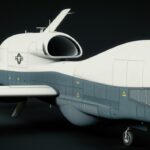

An Air Force official said the Collaborative Combat Aircraft effort continued through the funding lapse with no direct program impacts. “Personnel supporting critical test and development activities were identified as excepted and returned from furlough to ensure continuity of operations and avoid any potential delay,” the official said. Flight testing stayed on plan, and the service described the effort as ahead of schedule.
CCA Testing Excepted Under Shutdown Rules
Shutdown guidance let commanders designate excepted activities, recall a limited number of civilians, and keep mission-essential testing inside the law. The Air Force used those authorities to restart work by test ranges, airworthiness teams, and system safety engineers that the service marked essential for CCA progress.
Across federal agencies, standard furlough rules applied. Agencies recalled specific specialists to prevent interruptions in critical programs. Federal personnel guidance defines which duties can continue during a lapse and how agencies may bring back staff to perform excepted tasks. Officials confirm the Air Force relied on those rules to keep CCA test execution intact.
According to industry sources, range scheduling and instrumentation support remained available for CCA sorties once the excepted lists were finalized. The recall of targeted civilian specialists narrowed the risk window and helped the program hold to already signaled dates for ground and flight events. Officials also said the service prioritized test safety oversight and government airworthiness reviews under the excepted framework.
YFQ-44A First Flight and October 31 Milestone
Anduril’s YFQ-44A made its first flight in California on October 31. The aircraft flew semi-autonomously, managing its own flight controls and throttle, and executed an automated landing. “This milestone demonstrates how competition drives innovation and accelerates delivery,” Air Force Secretary Troy Meink said in a statement released with the flight announcement.
Company founder Palmer Luckey warned on October 13 that a prolonged shutdown would “certainly” delay first flight, then clarified later that schedule impacts would occur only if the lapse persisted. Officials said the excepted status for key government personnel kept test range access, safety coverage, and witnessing in place, and the event went ahead on October 31.
Program watchers expected the YFQ-44A to fly earlier in the fall after leaders pointed to mid-October as a target, and the service did not confirm a date in advance. The October 31 sortie confirms propulsion and flight-control performance on a production-representative jet and produces data for later test points. Anduril’s release described an opening profile focused on checking autonomy behaviors in normal regimes before moving to more demanding conditions.
According to industry sources, early test cards focus on power quality for subsystems, stability of the flight-control laws across pitch, roll, and yaw, and telemetry reliability for off-board monitoring. Those events lead into runs at higher dynamic pressure where structural margins and control authority interact more strongly. None of that sequence needed a government reset once excepted staff returned, which is why the first flight stayed inside October even though some civilian agencies extended furloughs into November.
YFQ-42A August Start and Fighter Designation
General Atomics’ YFQ-42A began flight testing on August 27, and the Air Force confirmed the event the same day. The aircraft builds on the AFRL XQ-67A lineage, but the YFQ-42A is a fighter-type configuration intended for higher speed and maneuver loads. The August sortie opened an Air Force-witnessed campaign at a California site and set a baseline the service used to keep Increment 1 on track through the fall.
The Air Force recognized both CCA prototypes with YFQ designations earlier this year, classifying them as uncrewed fighters under service nomenclature. Officials indicate the two designs now in test-the YFQ-42A and YFQ-44A-are intended to operate alongside F-22s and F-35s in air-to-air roles. The service has stressed the value in maturing two competing designs in parallel rather than shrinking the field too quickly.
Program structure pairs each airframe house with a separate autonomy supplier. The YFQ-42A flies RTX software, and the YFQ-44A carries code from Shield AI. The split gives government evaluators a direct comparison of autonomy performance across different vehicle dynamics and sensor fits, with attention to formation keeping, threat response, and tasking in representative missions. Officials familiar with contract scopes and late-September test readiness reviews said this arrangement remained in place through the shutdown window.
The first-flight cadence shows a staggered schedule. YFQ-42A achieved initial airworthiness in late August, followed by YFQ-44A at the end of October. This spacing lets the CCA team alternate test windows and share lessons on telemetry integration, mission-computer resets, and envelope expansion without overloading the same instrumentation ranges. The team can also start an early comparison for reliability metrics. Both aircraft will build hours before winter maintenance periods.
Funding Posture and Netherlands Participation
Federal guidance during the October lapse spelled out which activities could continue using prior-year obligated funds, multi-year appropriations, or specific exceptions under law. In practice, ongoing CCA test events operated under excepted status with obligated money already in place for near-term work.
A Defense Department memo dated October 16 allowed program offices to recall essential civilian personnel for safety, protection of property, and funded operations. That action enabled Air Force teams to bring back test conductors, airworthiness staff, and range safety officers in the numbers needed for the fall cards. The same memo constrained non-essential analysis and travel, so the service concentrated on tasks tied directly to test execution and risk reduction.
Allied participation continued in this period. The Netherlands signed a letter of intent on October 16 to join the U.S. CCA initiative, aligning its autonomous air systems work with the Air Force construct. According to officials, that engagement supports future interoperability once U.S. prototypes move deeper into mission-systems trials.
Program leaders have said they can carry more than one contractor into production for Increment 1 if performance and pricing support it, and they have signaled additional concept awards for Increment 2 within months. Officials confirm those planning markers did not slip during the shutdown. The parallel test campaigns now underway give the government current data to inform any down-select and to refine the next solicitation language on autonomy behaviors and manufacturability.
Our analysis shows the decision to except key personnel, continue activities using already-obligated funds, and stick to the set test queue limited schedule risk for the CCA Increment 1 prototypes. The results are visible. A completed first flight for YFQ-44A on October 31 and continued sorties for YFQ-42A. With both aircraft flying, the Air Force enters winter test blocks with two maturing baselines, a live autonomy comparison across different airframes, and a feasible plan to keep production-representative configurations moving without a schedule reset.
REFERENCE SOURCES
- https://breakingdefense.com/2025/10/air-force-shields-cca-drone-wingman-program-from-effects-of-government-shutdown/
- https://www.reuters.com/business/aerospace-defense/us-defense-company-anduril-flies-its-uncrewed-jet-drone-first-time-2025-10-31/
- https://www.anduril.com/article/anduril-yfq-44a-begins-flight-testing-for-the-collaborative-combat-aircraft-program/
- https://www.af.mil/News/Article-Display/Article/4287627/collaborative-combat-aircraft-yfq-42a-takes-to-the-air-for-flight-testing/
- https://www.ga-asi.com/ga-asi-marks-another-aviation-first-with-yfq-42a-cca-flight-testing
- https://www.airandspaceforces.com/anduril-cca-first-flight/
- https://media.defense.gov/2025/Oct/16/2003815760/-1/-1/0/GUIDANCE-FOR-CONTINUATION-OF-OPERATIONS-DURING-A-LAPSE-IN-APPROPRIATIONS-OCT-2025.PDF
- https://www.opm.gov/policy-data-oversight/pay-leave/furlough-guidance/guidance-for-shutdown-furloughs.pdf
- https://english.defensie.nl/latest/news/2025/10/16/defence-joins-us-initiative-on-unmanned-air-systems
- https://breakingdefense.com/2025/10/anduril-drone-wingman-prototype-makes-first-flight-air-force-says/
- https://insidedefense.com/daily-news/anduril-lengthy-government-shutdown-could-delay-yfq-44a-first-flight