New language attached to the Fiscal Year 2026 National Defense Authorization Act orders the U.S. Air Force to explain how it will keep the Airborne Command Post mission, often called Looking Glass, after the Navy begins retiring the E-6B Mercury fleet. The provision names a C-130J-30 Super Hercules production option and asks how the mission will connect to the Air Force’s Secondary Launch Platform Airborne effort.
FY2026 NDAA report requirement for Airborne Command Post capability
Section 154 limits how much of the Office of the Secretary of the Air Force’s Fiscal Year 2026 travel-expense funding can be obligated or spent until the Air Force submits a report on its acquisition strategy for the Airborne Command Post capability. The statute caps obligations and expenditures at 80 percent until the Secretary, after consultation with the Commander of U.S. Strategic Command, submits the report to the congressional defense committees.
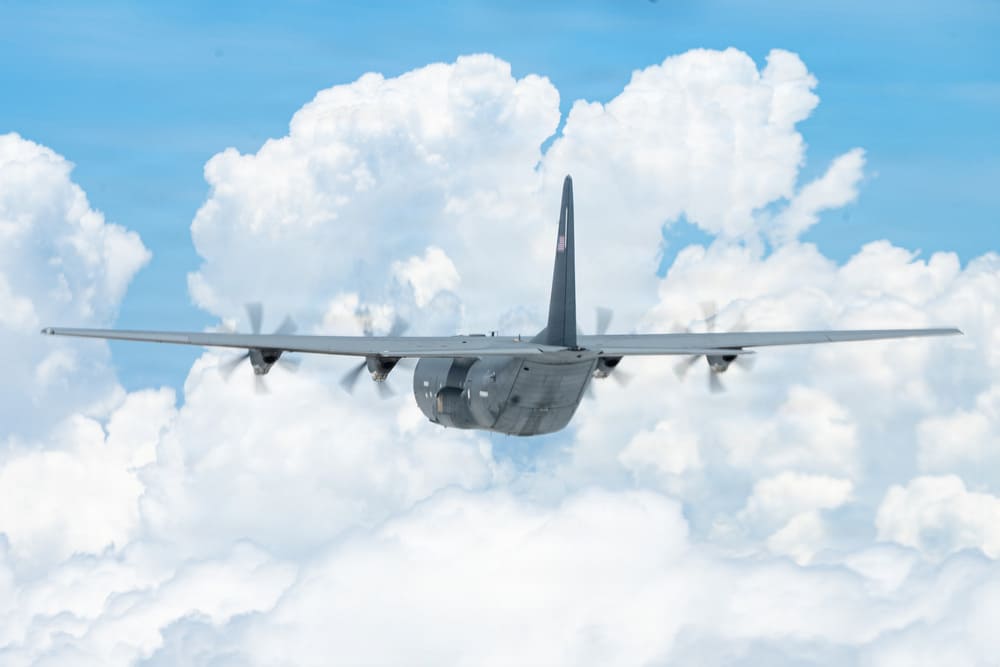
Congress directs the content of that report. The Air Force must address options to expand production of the C-130J-30 Super Hercules to provide additional airframes that preserve the Airborne Command Post mission. It must also outline the future relationship between the Airborne Command Post mission and the Secondary Launch Platform Airborne effort.
Defense officials confirm lawmakers have received briefings on Airborne Command Post continuity across 2025, but public reporting still does not show how the Air Force plans to replace the E-6B support it receives today. The E-6B carries the Airborne Launch Control System used as an alternate path to transmit launch commands to Minuteman III intercontinental ballistic missiles, and it also supports the Navy’s Take Charge And Move Out mission.
The bill forces a procurement answer. If the Air Force chooses a C-130J-30-based approach, it must say whether it would expand aircraft buys from the existing production stream and how it would structure integration of the mission equipment. Congress tied that request to a travel-funds limitation that reaches senior headquarters.
E-6B Mercury ALCS role and the November 2025 Minuteman III test launch
Air Force Global Strike Command described a recent operational example on Dec. 5. The command said Airmen from the 625th Strategic Operations Squadron employed the Airborne Launch Control System aboard a Navy E-6B Mercury to initiate the Glory Trip 254 operational test launch of an unarmed Minuteman III intercontinental ballistic missile from Vandenberg Space Force Base on Nov. 5.
“The ALCS provides the nuclear forces a survivable and secondary capability to transmit launch commands to our ICBMs,” said Maj. Dalton Douglas, a 625th STOS missile combat crew member airborne. “In the event launch control centers that hold our land-based missileers are unable to direct and execute our ICBM arsenal by presidential orders, the ALCS is the alternate means to control and employ those missiles by air.”
Eighth Air Force public affairs reported on Nov. 14 that the 625th STOS took part in a Simulated Electronic Launch Minuteman test on Sept. 18 over Montana, with a Navy E-6B overhead to send launch commands through the airborne system. The release describes a test that drives the missile through command sequences short of first-stage ignition, and crews check how multiple systems interact under scripted conditions.
Capt. Gregory Nordhues, the squadron’s ALCS deputy missile crew combat commander airborne, said, “Since there are so many different systems involved, SELM provides the opportunity to test different interactions between the systems by driving the missile to have a certain status and ensure the missile responds as it should.”
The Air Force has not announced a replacement aircraft for the Airborne Launch Control System mission. For now it relies on Navy aircraft availability while Air Force crews operate the launch-control kit. Section 154 asks for an acquisition strategy that remains viable through the Navy’s aircraft transition.
C-130J-30 Super Hercules and the Navy E-130J TACAMO replacement
Section 154 does not order the Air Force to buy a Hercules variant. It does force the Air Force to address whether the service can preserve the Airborne Command Post capability by expanding production of the C-130J-30 and adapting those aircraft for the mission.
Public reporting and imagery released in early September describe the Navy’s future TACAMO recapitalization aircraft as a C-130J-30 air vehicle that will receive a mission-system modification package. The Navy plan does not automatically solve the Air Force Airborne Command Post requirement, but it gives Congress a concrete example of a nuclear communications aircraft derived from the same baseline transport.
According to industry sources, congressional staff have asked whether the Air Force could reuse parts of the Navy’s air-vehicle work that translate across variants, and still field a distinct Air Force mission suite for the Airborne Command Post role. The NDAA language does not direct that path, but it does require the Air Force to state whether it sees the C-130J-30 as a viable host and how it would approach procurement and integration at the program level.
The C-130J-30 option stands out because the Airborne Command Post mission needs more than a standard communications relay. The Air Force must maintain secure, survivable links and a launch-control capability that can reach missile fields when ground nodes fail. Congress has not described the technical solution in statute. It has told the Air Force to show how it plans to meet those requirements on the aircraft it chooses.
Secondary Launch Platform Airborne and the E-4C Survivable Airborne Operations Center context
Section 154 pairs the C-130J-30 production question with a requirement tied to modernizing airborne launch command and control. The statute asks the Air Force to outline the future relationship between the Airborne Command Post capability and the Secondary Launch Platform Airborne effort.
Recent Air Force statements show the service has treated secondary launch capability as part of an active test cycle. The Nov. 14 release on the Sept. 18 SELM event describes a test meant to validate system interactions required for an airborne launch path, while the Dec. 5 release describes an operational test launch that used the airborne system to initiate a Minuteman III shot from Vandenberg.
The Air Force also continues a separate effort to replace the E-4B with a new Survivable Airborne Operations Center aircraft, designated E-4C. Early September reporting said the contractor had begun early flight-test activities tied to that program. Congress did not fold that work into Section 154, but it has now demanded a distinct answer for the Airborne Command Post mission and its relationship to Secondary Launch Platform Airborne.
Congress has put a formal deliverable behind a funding limitation and it has narrowed what it wants answered. The Air Force must describe whether it will pursue a C-130J-30-based Airborne Command Post aircraft and it must explain how that decision aligns with Secondary Launch Platform Airborne. Our analysis shows lawmakers want a program answer that stands on its own, not a continuation of an arrangement that relies on Navy aircraft without a defined Air Force acquisition plan.
REFERENCE SOURCES
- https://armedservices.house.gov/news/documentsingle.aspx?DocumentID=6359
- https://armedservices.house.gov/ndaa/fy26-ndaa-resources.htm
- https://www.govinfo.gov/content/pkg/BILLS-119s1071enr/html/BILLS-119s1071enr.htm
- https://www.afgsc.af.mil/News/Article-Display/Article/4351122/gt-254-625-stos-uses-alcs-launches-unarmed-icbm/
- https://www.afnwc.af.mil/News/Article-Display/Article/4354396/625th-stos-uses-alcs-launches-unarmed-icbm/
- https://www.8af.af.mil/News/Article-Display/Article/4332142/625th-stos-validates-secondary-launch-capability/
- https://www.sncspace.com/news/air-force-begins-early-risk-reduction-flight-test-activities-for-the-e-4c-survivable-airborne-operations-center-saoc/
- https://www.defensenews.com/air/2025/09/04/us-air-force-commands-new-doomsday-aircraft-starts-test-flights/
- https://www.flightglobal.com/fixed-wing/sierra-nevada-begins-flight-testing-e-4c-doomsday-aircraft/164369.article
- https://theaviationist.com/2025/09/05/first-e-130j-phoenix-ii-airframe-emerges/