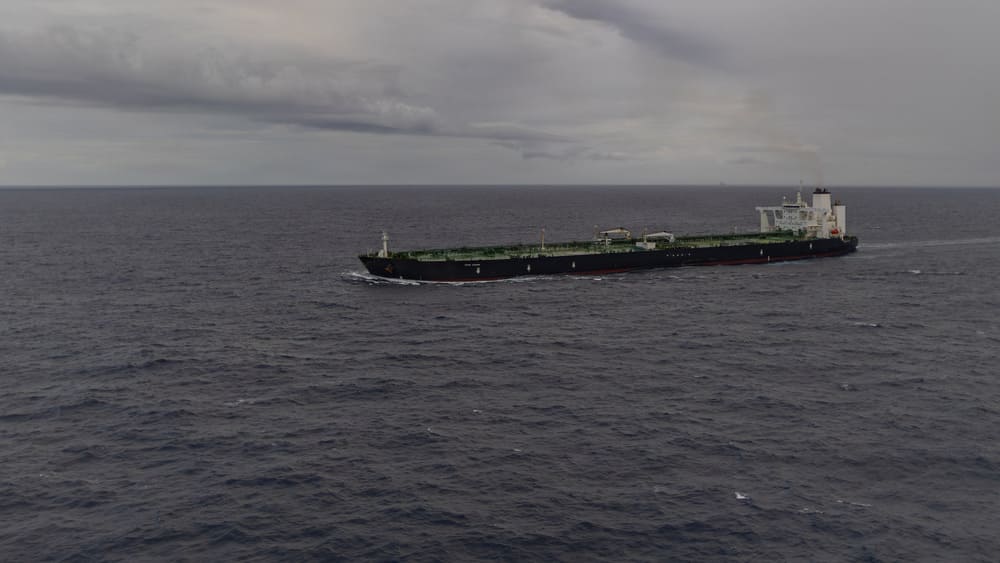
Ukrainian security officials said aerial drones struck the crude oil tanker Qendil in the Mediterranean Sea. The vessel is tied to Russia’s sanction-evasion oil exports, according to Western tracking and sanction records. Ukraine described the strike as its first confirmed attack on a Russia-linked tanker outside the Black Sea. Russian officials have not confirmed damage to the ship, and independent verification remains limited to the imagery released so far.
SBU says Alpha unit hit Qendil in neutral waters more than 2,000 kilometers from Ukraine
A person described as a source within Ukraine’s Security Service said the service carried out “a new, unprecedented special operation” in the Mediterranean. The source said the action took place “more than 2,000 kilometers” from Ukraine’s territory. Ukraine attributed the strike to its Alpha special operations element and described it as a multi-stage effort.
Ukraine said the Qendil was empty during the attack. “Accordingly, the attack posed no threat to the environmental situation in the region,” the SBU source said. That detail aligns with the ship’s recent port history described in tracking records and reporting tied to the incident.
Defense officials confirm the public video linked to the claim shows a small explosion on the tanker’s deck area, with limited context on time and location. The same source said the ship “suffered critical damage and cannot be used for its intended purpose.” No official statement has described casualties, and no crew count has been released in the public summaries.
Russian commentary has focused on air defense and maritime security, but it has not provided matching detail on the vessel’s condition. Some shipping data providers showed the tanker off Libya’s coast during the day on Dec. 19. The attack window itself remains unclear in public reporting, since the route data reflects periodic position updates rather than a continuous feed.
Qendil route from Novorossiysk to Jamnagar and shadow fleet sanction links
Tracking data linked to the ship indicates Qendil left Russia’s Black Sea port of Novorossiysk on Nov. 4, then transited the Bosphorus and the Mediterranean. The route continued through the Suez Canal toward India. The tanker berthed at Jamnagar and unloaded on Dec. 1, according to shipping intelligence reporting tied to the event.
The ship is flagged to Oman and was built in 2006. Public vessel registries list its deadweight capacity at 115,338 tonnes. After unloading, tracking data showed Qendil departing and heading west in the Mediterranean on a route consistent with a return voyage.
European and British sanction authorities have listed Qendil as part of Russia’s so-called shadow fleet, according to reporting that cites those sanction actions. The term covers vessels used to move Russian oil despite restrictions, with ownership chains that can be hard to trace. Maritime services and enforcement agencies have tied the network to practices such as frequent flag changes and management structures that rely on shell companies.
Ukraine’s SBU used similar language in its justification for the strike. “Russia used this tanker to circumvent sanctions and earn money that went to the war against Ukraine,” the agency said in a statement. The SBU then described the ship as a lawful target under its view of armed conflict rules. “Therefore, from the point of view of international law and the laws and customs of war, this is an absolutely legitimate target for the SBU,” the statement said.
Video shows multirotor munition drops and suggests a short-range strike method at sea
The imagery released with the claim differs from earlier Ukrainian strikes on shipping in the Black Sea. The video appears to show small munitions dropped onto the tanker from a multirotor aircraft. That approach resembles battlefield “bomber drone” tactics used on land, but applied against a ship’s upper deck.
The video does not show an impact below the waterline. It also does not show a follow-on fire that would confirm extensive internal damage. The visible effects appear limited to topside equipment and deck structures, though video compression and distance reduce confidence in precise assessment.
According to industry sources, a multirotor drop attack points to a nearby launch point, either a vessel operating close to the tanker or a coastal site within range. A small drone of that type typically lacks the endurance for long open-water transit without a nearby staging platform. Public reporting has not identified any supporting vessel, and no government has acknowledged a launch location.
Ship tracking linked to the incident suggests the tanker was transiting between Malta and Crete around the period in question. Data cited in reporting also indicates Qendil executed a U-turn near midnight and later set an eastbound course, with Port Said listed as a destination. The reason for the course change is not established in public reporting.
A maritime security firm monitoring the case framed the geographic shift as the key change. Vanguard said the incident reflected “a stark expansion of Ukraine’s use of uncrewed aerial systems against maritime assets associated with Russia’s sanctioned oil export network.” The firm described the strike as the first confirmed Ukrainian attack this far from the Black Sea theater.
Putin’s response and shipping risk picture after first Mediterranean strike on a Russia-linked tanker
The strike landed amid an already active exchange over Russian oil shipping. Ukraine has acknowledged or been linked to multiple attacks on tankers in and near the Black Sea in recent weeks. Moscow has signaled it views those incidents as part of a direct economic pressure campaign, not only as battlefield activity.
Earlier this month, President Vladimir Putin issued a public warning tied to tanker attacks. “The most radical solution is to cut Ukraine off from the sea, then piracy will be impossible in principle,” he said in televised remarks. He returned to the subject during his end-of-year press conference on Dec. 19, with Russian state and international media reporting his pledge to respond to strikes on oil shipping tied to Russia.
Commercial operators now have to account for a new risk area in shipping assessments, even while facts remain limited. The Mediterranean already carries dense merchant traffic and regular naval presence from multiple states. A short-range drone attack introduces a different threat profile than sea mines or long-range missiles, since a small aerial vehicle can blend into clutter until late in an approach.
Insurers, flag states, and port authorities will watch how quickly evidence emerges on ship damage and repair status. Tracking data will also be watched for patterns, such as altered routes, longer loiter times, or sudden AIS disruptions. Our analysis shows the Qendil strike claim expands the contested shipping picture beyond the Black Sea, while keeping the attack method low-end and hard to attribute in real time.
REFERENCE SOURCES
- https://www.reuters.com/business/aerospace-defense/ukraine-hits-russian-shadow-fleet-tanker-mediterranean-first-time-sbu-source-2025-12-19/
- https://www.ukrinform.net/rubric-ato/4071400-ssu-strikes-russian-shadow-fleet-tanker-for-first-time-in-neutral-waters-of-mediterranean-sea.html
- https://www.lloydslist.com/LL1155927/Ukraine-targets-shadow-fleet-tanker-in-Mediterranean
- https://www.twz.com/news-features/ukraine-strikes-russia-linked-tanker-in-the-mediterranean-with-bomber-drone
- https://www.reuters.com/world/europe/putin-threatens-cut-ukraine-off-sea-after-attacks-tankers-2025-12-02/
- https://www.theguardian.com/world/2025/dec/19/ukraine-attacks-russian-shadow-tanker-off-libyan-coast
- https://kyivindependent.com/ukrainian-drone-strike-hits-russias-shadow-fleet-tanker-in-mediterranean-sea-for-the-first-time-source-says/
- https://apnews.com/article/02d78e4aeda205391f72dfccdc005561