India is moving to pull retired Jaguar airframes out of Oman for parts. The Indian Air Force wants to keep six Jaguar squadrons viable while new fighter buys keep slipping right. The plan extends a fleet that still fills strike and maritime roles.
Oman Jaguar spare aircraft for Indian Air Force spares and sustainment
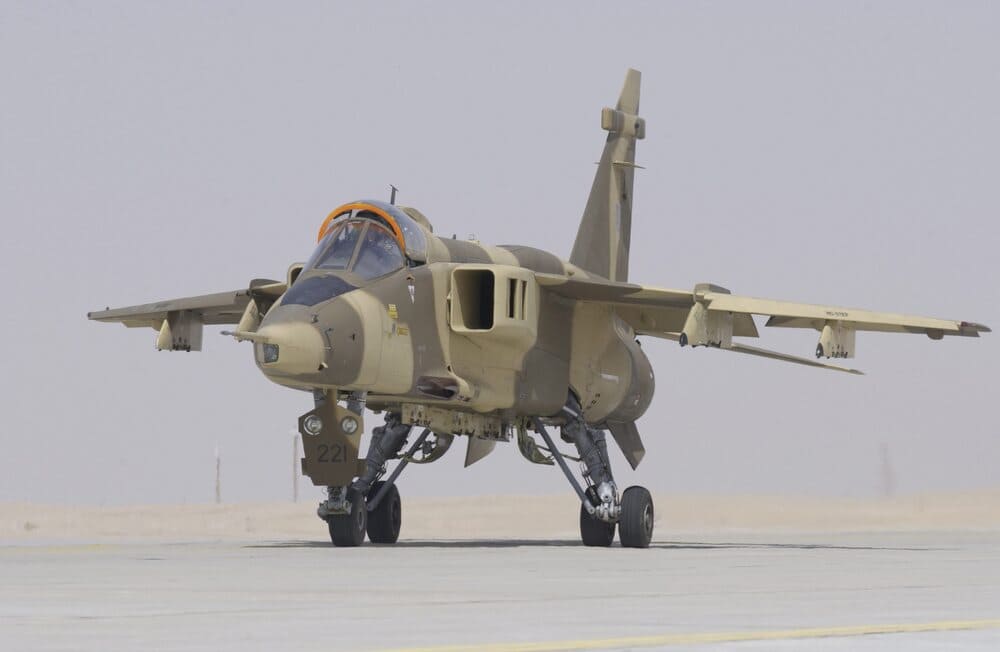
India and Oman have reached a deal that sends surplus Omani Jaguars into Indian hands, according to multiple reports from early December. The aircraft will not enter Indian service. The airframes will support the Indian fleet as donor jets, with assemblies and components stripped for use as spares.
Oman retired its Jaguars in 2014, yet some aircraft remained in storage. The Omani fleet began arriving in 1977 and totaled 27 aircraft. That included 20 single seat jets, five two seat trainers, and two ex Royal Air Force aircraft used as attrition replacements. Accidents cut the number of intact hulls.
Most reporting places the likely intact total well under the original 27. Some airframes were written off, yet still carry salvage value. Landing gear units, actuators, wiring, panels, and structural fittings still matter when production lines closed decades ago. The same applies to cockpit items that do not exist in fresh inventory.
The Indian plan centers on breaking the aircraft down in Oman, then shipping packed parts to India. Angad Singh, an Indian Air Force historian, said the jets will be dismantled in Oman and sent over in a form that travels easier. Smaller lots also reduce the need for special handling at ports.
People familiar with sustainment efforts say the search often targets engines, life limited components, and hard to source airframe pieces. Adour support remains a concern for operators worldwide, and the vendor base has narrowed. A donor fleet also provides spares that match known configurations, which reduces rework on arrival.
Oman gives India a cleaner donor pool than many other options. The aircraft share close lineage with Indian Jaguars, and Oman maintained the type for decades. A donor transfer also avoids the long lead times tied to reverse engineering and recertifying parts for flight use.
Indian Air Force Jaguar squadrons, attrition, and spare parts shortages
India selected the Jaguar in 1978 as its Deep Penetration Strike Aircraft. The service first received 18 aircraft from Royal Air Force stocks as interim equipment. India then took 40 flyaway aircraft from British Aerospace and license built around 128 more at Hindustan Aeronautics Limited.
Today the Indian Air Force operates six Jaguar squadrons, with about 18 to 20 aircraft per squadron on strength. The fleet has kept a steady operational role across decades, yet attrition keeps cutting the usable pool. The oldest British built jets now sit around the 45 year mark.
The supply problem shows up in day to day readiness. The last new Jaguar rolled off the Indian production line in 2008. British and French production ended long before. India has leaned harder on cannibalization, which keeps a portion flying while shrinking the remainder.
Crash losses in 2025 added pressure on a fleet that already faced limited spares. On July 9, 2025, the Indian Air Force said on X, “An IAF Jaguar Trainer aircraft met with an accident during a routine training mission and crashed near Churu in Rajasthan.” Two pilots died in that crash.
Earlier in 2025, additional accidents reduced the fleet again, with at least one pilot fatality reported in a night training crash near Jamnagar in April. A March crash near Panchkula ended with the pilot ejecting after the jet lifted off from Ambala. Each loss pulls parts out of the pool and adds repair work.
India has already hunted spares outside the country. In 2018 and 2019, France shipped 31 complete airframes plus spares to India after retiring its Jaguars years earlier. New Delhi paid the transport costs. Those donor hulls helped stabilize availability for a period.
The Oman move follows the same logic. India needs donor aircraft to keep a shrinking fleet mission capable. The alternative sits in new production, yet no one builds Jaguars now. The only path left runs through stored airframes, reclaimed components, and local refurbishment.
Jaguar DARIN upgrades, sensors, weapons, and the maritime strike variant
India has not treated the Jaguar as a static 1980s platform. The fleet has moved through the Display Attack Ranging and Inertial Navigation upgrade line for decades. The first DARIN package began in the 1980s and kept the original chisel nose profile.
DARIN I added a new navigation and attack suite, along with a combined map and electronic display. It brought a head up display and a weapons aiming computer. A Mil Std 1553B databus arrived, which opened room for later sensors and weapons. Jaguars used laser guided bombs in the 1999 Kargil War.
DARIN II arrived in the early 2000s and changed the nose profile. It added a laser targeting and designation system and new cockpit displays. Self protection improved through a jammer, radar warning receivers, and updated countermeasures dispensers. India also added new weapons, which included ASRAAM and the CBU 105 Sensor Fuzed Weapon.
A separate subset of Jaguars focuses on maritime strike. These aircraft first used an Agave radar tied to Sea Eagle anti ship missiles. Later updates replaced the radar with an EL/M 2032 set and shifted the missile fit to AGM 84 Harpoon Block II. The maritime Jaguars keep a niche role that few other Indian types cover the same way.
DARIN III became the most extensive modernization effort. Work began in 2008 and centered on the EL/M 2052 active electronically scanned array radar. The Jaguar became the first Indian combat jet to field an AESA radar through this program, according to reporting tied to the upgrade effort.
DARIN III also brought a glass cockpit and multiple multifunction displays. The package includes an engine and flight instrument system digital display and a digital head up display. It adds helmet cueing through the Elbit Display and Sight Helmet, which supports ASRAAM employment on the Jaguar’s overwing pylons.
The program has moved slower than planners wanted. The first flight of an upgraded DARIN III Jaguar took place in 2012, then delays followed. Integration issues hit the locally developed open system mission computer. Additional delays came from parallel work to improve engine performance, then that path shut down.
India planned to replace the Rolls Royce Turbomeca Adour afterburning turbofans with Honeywell F125 IN engines. The re engining plan died in 2019 after cost growth, with Indian reporting later placing the price well beyond what the air force could absorb. The fleet continues on Adour support and incremental refurbishment.
DARIN III aims to extend the life of at least part of the fleet into the 2040s, with some planning references reaching toward 2050. Singh has said the oldest jets will not see the full upgrade. Two squadrons could disband earlier, while the newer HAL built aircraft carry the modernization load.
Indian Air Force fighter squadron gap and why Jaguars remain in service
The Jaguar stays because India still lacks enough modern fighters in service today. Indian force planning has long cited a 42 squadron target for combat aircraft. By late September 2025, the force stood at 29 squadrons after the retirement of the last MiG 21 squadron, according to multiple reports tied to the drawdown.
The MiG 21 retirement pulled a long running backstop out of service. The gap now sits across strike, air defense, and training pipelines. The Indian Air Force has newer aircraft, yet not in the numbers that offset retirements on schedule. Defense officials confirm that squadron recovery depends on both new deliveries and service life extensions.
India bought 36 Rafales, yet follow on fighter procurement has moved slowly. A plan for 114 additional fighters has stayed in review for years. The same drag shows up in local programs. Tejas induction has faced delays tied to engines and production rates, which pushes timelines right for filling frontline squadrons.
The Jaguar fills a role that India cannot replace quickly with a single type. It carries standoff weapons and supports deep strike planning. It also supports maritime strike in its IM form. Crews and maintainers already exist, and the logistics chain still runs, even if it strains.
Angad Singh said, “The Jaguar is still useful as a strike aircraft, and has been kept relevant with upgrades to electronic warfare, nav-attack systems, standoff weapons, and so on.” The quote matches the logic behind the Oman donor deal. India is buying time with airframes and parts, not adding new capability lines.
Singh also tied the fleet decision to the larger combat aircraft shortage. “The Indian Air Force is at 70 percent of its planned 42-squadron fighter strength — a number that was arrived at in the 1960s and will only be revised upward on any fresh assessment. Given this dire situation, the brass simply has no choice but to keep aircraft around, no matter how old,” he said.
The Oman airframes will not stop retirements across the decade. They can keep availability steadier while upgrades continue and procurement decisions move. Our analysis shows the Jaguar remains an active tool in Indian planning because the fleet gap persists, and the Jaguar still carries missions that planners do not want to park.
REFERENCE SOURCES
- https://www.twz.com/air/india-cant-give-up-its-jaguar-strike-aircraft
- https://theprint.in/defence/india-looks-to-oman-for-spare-parts-to-keep-its-fleet-of-jaguars-flying/2801192/
- https://www.scramble.nl/military-news/india-to-receive-former-oman-air-force-jaguar-fighters
- https://aerospaceglobalnews.com/news/india-iaf-jaguar-spares-oman/
- https://www.zona-militar.com/en/2025/12/17/with-the-purchase-of-spare-aircraft-from-oman-the-indian-air-force-resists-retiring-its-aging-sepecat-jaguar-fleet/
- https://www.asianmilitaryreview.com/2025/12/india-eyes-retired-omani-jaguar-fleet-for-spares-foc/
- https://armyrecognition.com/news/aerospace-news/2025/oman-to-send-retired-jaguar-jets-to-india-to-keep-planes-flying
- https://apnews.com/article/india-air-force-mig21-fighter-jets-37618f8c6ea0315fa9c6d636fae30b77
- https://aviation-safety.net/wikibase/525611
- https://www.defensenews.com/global/asia-pacific/2019/08/26/india-cancels-jaguar-upgrade-over-honeywells-24b-price-tag/
- https://quwa.org/daily-news/hal-test-flies-jaguar-darin-iii-elm-2052-aesa-radar/