Ukraine’s security service reported that it disabled a Russian Kilo-class submarine in Novorossiysk. The claim centers on a new uncrewed underwater vehicle called Sub Sea Baby. Russia’s defense ministry rejected the account and said ships and crews remained unaffected.
Sub Sea Baby underwater drone attack on Russian submarine in Novorossiysk
Ukraine’s Security Service posted video that shows an explosion inside the naval port at Novorossiysk. The blast appears close to a submarine moored alongside other vessels. The agency described the strike as a first for underwater drones used as attack weapons against a submarine.
In its statement, the agency wrote “Вперше в історії підводні дрони «Sub Sea Baby» підірвали російський підводний човен класу 636.3 «Варшавянка».” The same post said the submarine took major damage and went out of service.
Russia’s defense ministry published a denial on its official channel. It said the Ukrainian claim “does not correspond to reality.” The post also said “Not a single ship or submarine” in the bay suffered damage after what it called a sabotage attempt.
The Russian statement described the event as an attack that used an uncrewed surface vehicle. Ukraine described an underwater platform. The mismatch matters because the two threats drive different defenses in port. Surface drones face barriers and direct fire. Underwater drones face sonar, divers, nets, and patrol craft.
A crowded harbor adds another layer. The video shows multiple hulls close together and limited maneuver room. Ukraine’s version implies the drone navigated to a specific target in a tight mooring area. Russia’s version implies the incident stopped short of damaging any ship.
Project 636.3 Varshavyanka Improved Kilo submarine and Kalibr cruise missiles
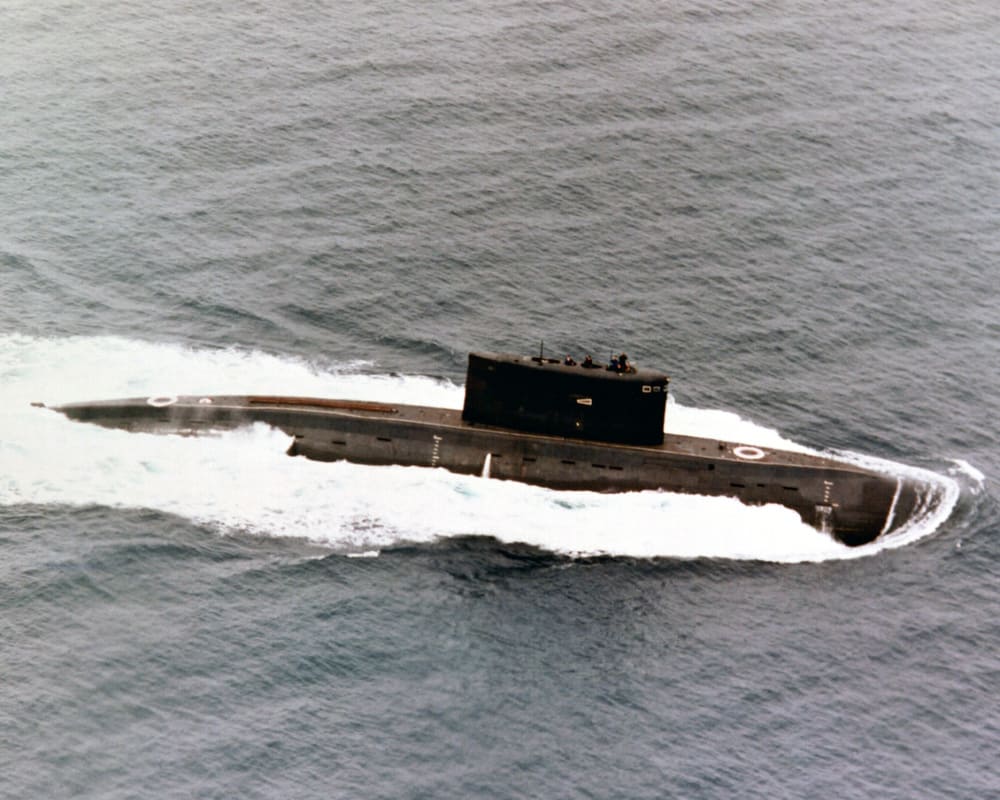
Ukraine said the target was a Project 636.3 Varshavyanka, often labeled Improved Kilo. Those diesel electric boats serve as quiet launch platforms when they run on battery power. They also carry torpedoes and can deploy cruise missiles on some configurations.
The Ukrainian statement said four Kalibr cruise missile launchers sat onboard the submarine it hit. It tied the strike to Russia’s use of Kalibr attacks against targets in Ukraine. Russia did not confirm the submarine identity or any damage.
Ukraine placed the submarine’s value near 400 million dollars and said sanctions push replacement cost higher. Cost figures vary across public reporting, but the price line signals why the target matters for Moscow. A disabled submarine can leave a gap that takes years to close.
Russia built six Project 636.3 submarines for the Black Sea Fleet. Several have rotated through the region during the war, with some reportedly hit in earlier strikes. Ukraine’s statement did not name the boat at Novorossiysk, and Russia’s denial avoided any discussion of which hull sat at the pier.
Novorossiysk has served as a key naval hub on the northeast Black Sea coast. It supports surface combatants, auxiliaries, and submarines. Ukraine’s sea drone campaign has put steady pressure on basing and port operations across the theater.
Evidence from the blast video and the dispute over underwater versus surface drones
The footage released by Ukraine shows the moment of detonation, but it does not show the drone itself. Underwater attack systems rarely appear on camera in the final seconds. Video from a fixed port camera also compresses distance and detail.
Independent reporting tied the video location to Novorossiysk and treated the blast as real. The same reporting stopped short of confirming the vehicle type beyond Ukraine’s claim. Public satellite imagery and damage imagery can clarify later, but those details fall outside what officials released on Dec. 15.
Ukraine’s description implies a submerged run inside a defended port. That type of route limits optical detection and complicates small arms response. It also forces the attacker to solve navigation, depth control, and target discrimination inside cluttered water.
Russia’s denial framed the event as a USV attempt. That framing fits the pattern of repeated surface drone strikes in the Black Sea. Ukraine’s sea drones have approached ports, bridges, and vessels at anchor. Several attacks have used explosive craft that steer through barriers or hit weak points at the edge of defenses.
Novorossiysk has seen earlier drone alerts and defensive activity. Public accounts often mention boom barriers and patrol craft in and around the harbor. A true underwater drone attack would push defenders toward wider underwater search patterns and tighter control of harbor traffic, even when surface barriers remain in place.
Ukraine Sea Baby maritime drones, Toloka UUVs, and the new anti-submarine drone threshold
Ukraine’s security service has used Sea Baby surface drones as a central tool in its maritime campaign. Officials have described improved range and heavier payload capacity in recent months. Those updates came with claims of modular payloads and improved control links.
An underwater version carries different advantages and limits. Water blocks radio waves and forces new communications choices. Guidance can rely on preplanned routes, inertial navigation, acoustic cues, or brief surface updates. A port strike also needs reliable terminal guidance near the pier.
Ukraine has also shown interest in longer-range underwater systems outside the Sea Baby family. In September 2025, Ukrainian outlets reported a Toloka underwater drone display with claimed long reach across the Black Sea region. The public information remains limited, but it shows work underway on submerged drones beyond one-off prototypes.
The SBU statement described the Novorossiysk event as a joint operation with Ukraine’s naval forces and a military counterintelligence directorate. The post did not disclose launch point, route, or control method. It also did not provide technical specifications for Sub Sea Baby.
Defense officials confirm that unmanned maritime systems now drive daily force protection decisions in the Black Sea. Sea drones already forced changes in patrol patterns, harbor posture, and escort tactics. A credible underwater attack option extends the threat below the waterline and forces more defensive coverage per port.
Our analysis shows the core change sits in access, not blast size. An underwater drone that reaches a submarine at the pier collapses a gap that defenders once treated as low risk. A confirmed hit would also move underwater drones from test concepts into routine wartime tools.
REFERENCE SOURCES
- https://ssu.gov.ua/novyny/sbu-vrazyla-pidvodnyi-choven-rf-u-novorosiisku-video
- https://t.me/s/mod_russia_en?before=24767
- https://www.reuters.com/world/europe/ukraine-hits-russian-submarine-first-underwater-drone-attack-2025-12-15/
- https://www.aljazeera.com/news/2025/12/15/ukraine-claims-it-struck-russian-submarine-in-novorossiysk-in-a-war-first
- https://www.euronews.com/2025/12/15/ukraine-hit-russian-submarine-with-underwater-drones-for-the-first-time
- https://apnews.com/article/0719211dd0314f2b9d15422e81ca66e3
- https://www.reuters.com/world/europe/ukraines-sea-baby-drones-are-growing-up-with-longer-range-bigger-payload-2025-10-22/
- https://kyivindependent.com/ukraine-showcases-underwater-drones-with-2-000-km-strike-capability/
- https://www.gpsworld.com/ukraine-shows-off-toloka-underwater-drone/
- https://en.wikipedia.org/wiki/Kilo-class_submarine