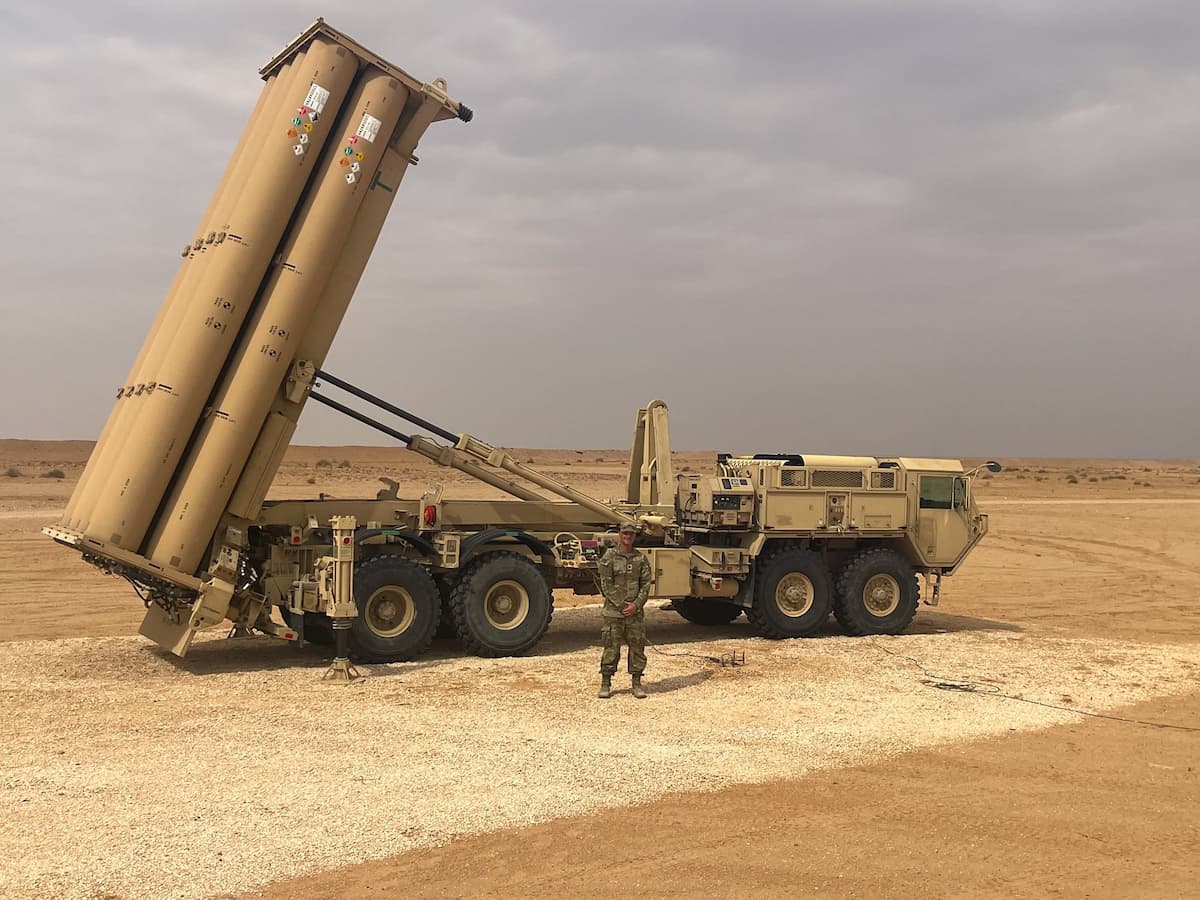
The factories rebuilding Patriot and THAAD stocks are running on a dated, public paper trail. The stocks themselves are the subject of a public fight between a cable network and the Secretary of War. Neither argument settles what Congress has actually paid for.
U.S. Central Command’s own name for the opening phase of the Iran war is precise about its length. Operation Epic Fury ran from 1:15 a.m. on February 28, 2026, and the White House’s April 8 victory statement, quoting Gen. Dan Caine, chairman of the Joint Chiefs, put the fighting at “38 days of major combat operation.” By CENTCOM’s own April 6 tally, that phase alone covered more than 13,000 targets struck and more than 155 Iranian vessels damaged or destroyed. Patriot and THAAD batteries were listed among the systems CENTCOM credited with defending U.S. forces and partner nations from day one. What the White House statement does not say, and what CSIS’s own research has since made explicit in its title, is that combat did not stay contained to those 38 days. A CSIS chart published July 27 is called, simply, “Renewed Iran War Would Test Diminished Interceptor Inventories.” The word doing the work is renewed.
That distinction matters for anyone trying to use the widely circulated interceptor-depletion figures for planning purposes, and this outlet has already published a detailed breakdown of where those figures disagree and why: different denominators, different cutoff dates, different counters entirely. This piece does not re-run that analysis. It starts from where the numbers stand today and asks a narrower, and so far unanswered, question: given the money already committed to rebuilding these stockpiles, how much of it has Congress actually enacted?
Two numbers, one denial
On August 4, CNN reported, citing unnamed sources described as familiar with Pentagon inventory assessments, that the U.S. had used “nearly 80%” of its THAAD interceptors and roughly half its Patriot stock since the war began. Secretary of War Pete Hegseth responded within hours, on his personal X account, to an on-air CNN chyron carrying the claim.
“Sources: U.S. has used nearly 80% of key missile interceptors in Iran war, top commanders warn stockpiles ‘dangerously low.'”
“That banner is NOT TRUE, @CNN. Shame on you. We don’t hate the Fake News media enough.”
Worth noting precisely what Hegseth disputed and what he did not. CNN’s figures were attributed to anonymous sources and had not been independently corroborated at the time of publication; Pentagon spokesman Sean Parnell separately told CNN the military has “everything it needs” for its missions. Hegseth’s rebuttal targeted CNN’s on-air characterization specifically. He did not, in the same exchange, dispute the named, published analysis CSIS had put out a week earlier, which used a different, lower set of figures with its methodology disclosed: Patriot inventories at between 759 and 827 and THAAD at about 250, as of July 27. Those are the numbers this piece uses going forward, not CNN’s, both because they carry a named author and a stated method and because they are the only figures in this dispute that the Secretary of War has not contested.
The industrial rebuild, dated
Whatever the exact depletion percentage, the manufacturing response has moved on a public, dated track since January.
| Date | Action |
|---|---|
| Jan 6 | Lockheed Martin and the Department of War sign a framework agreement to accelerate PAC-3 MSE production |
| Jan 29 | A second framework agreement commits to quadrupling THAAD interceptor production, from 96 interceptors a year to 400; Lockheed breaks ground on a Munitions Acceleration Center in Camden, Arkansas |
| Apr 10 | A $4.7 billion undefinitized contract action, year one of the PAC-3 MSE multiyear procurement, is awarded to Lockheed Martin |
| Jun 24 | A seven-year, up-to-$35 billion procurement award follows for THAAD interceptor production |
| Jul 29 | A $53.86 billion UCA modification for PAC-3 MSE brings Lockheed’s total multiyear contract value to $58.62 billion, with a stated goal of scaling annual production from roughly 600 to 2,000 interceptors by the end of 2030 |
| Aug 31 | General Dynamics Ordnance and Tactical Systems and Lockheed Martin sign further seven-year framework agreements covering motor cases, seeker housings and other subcomponents for both interceptor lines |
The company’s own figures put real weight behind the paperwork. Lockheed Martin says it is investing $8 billion to $9 billion through 2030 to modernize more than 20 U.S. facilities, and that the Camden, Arkansas plant alone will grow from about 1,200 to roughly 1,850 jobs. “This is a once-in-a-generation moment, and we are moving with wartime urgency,” chairman and chief executive Jim Taiclet said when the July award was announced.
None of that momentum is in dispute. What it does not answer is the question the contracts themselves raise. The Department of War’s own August 31 release states plainly that “the funding for these transformative agreements is subject to annual appropriations”, meaning the guaranteed quantities in these deals do not, by themselves, guarantee the money behind them past what has already been obligated.
The GEM-T stopgap
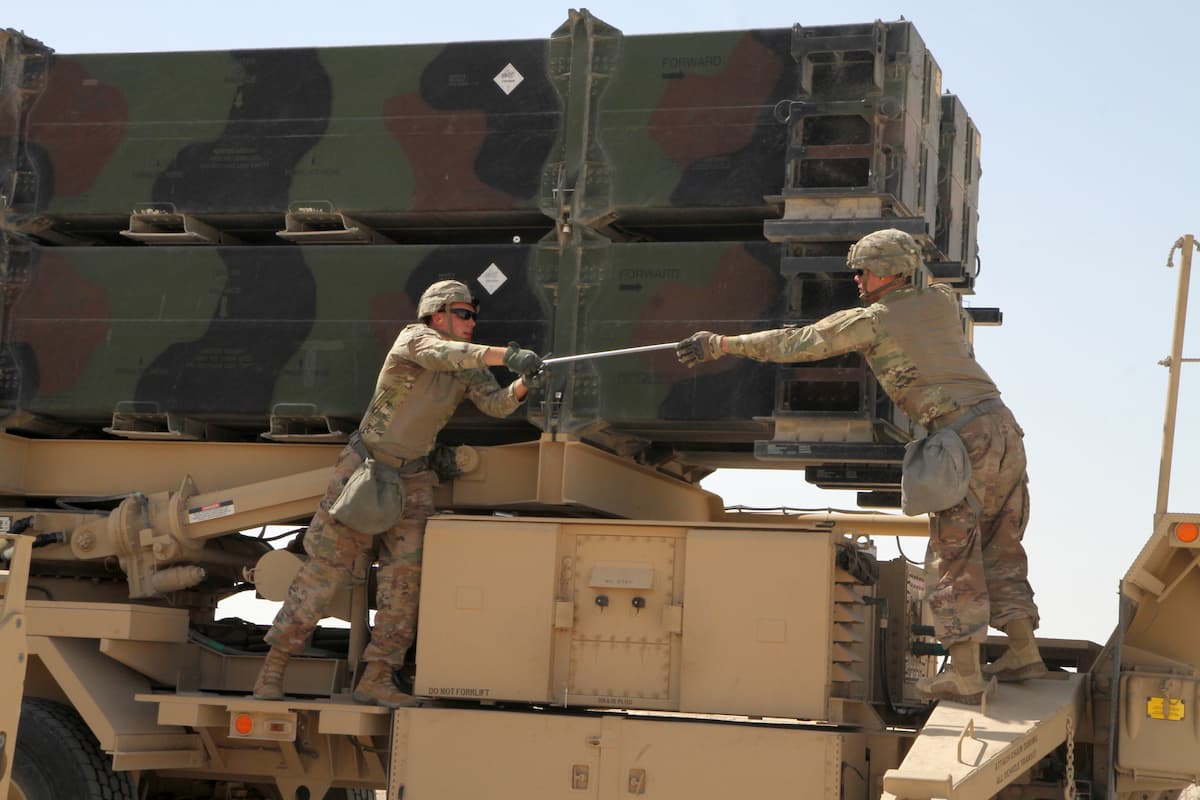
A smaller, faster-moving contract fills in a piece the multiyear PAC-3 and THAAD deals do not touch. In April, the Army quietly awarded Raytheon, now RTX, $441.6 million for newly manufactured PAC-2 GEM-T interceptors, the company’s first domestic GEM-T production order in more than 30 years, a detail RTX’s own chief executive, Christopher Calio, volunteered on a July 23 earnings call rather than in a Pentagon announcement. GEM-T is an older, semi-active radar-guided interceptor, cheaper than the hit-to-kill PAC-3 MSE and not a substitute for it against ballistic missiles, but a Patriot launcher can carry a mixed loadout of both, and the Army has stated a requirement for interceptors priced under $1 million for exactly this kind of magazine-depth role.
The scale is worth sitting with. This outlet’s own reporting on the contract put the order at roughly 150 rounds against the estimated 1,400 Patriot interceptors Epic Fury expended, about one round bought back for every seven fired, and flagged a detail easy to miss in the contract paperwork: the September 30 date attached to the deal is the end of the fiscal year in which the funds were obligated, not a delivery date. It is also worth noting what the contract is not. It was funded from FY2026 special funds rather than the ordinary appropriations process, a different mechanism again from the mandatory-versus-discretionary split running through the PAC-3 MSE and THAAD requests below. It is a reminder that “money committed” to Patriot replenishment is flowing through at least three distinct legislative channels at once, each with its own rules and its own timeline.
What Congress has actually written down
The FY2027 budget request shows why that caveat is not boilerplate. Of the $12.56 billion the Army requested for PAC-3 MSE procurement, covering 2,936 of the 3,203 interceptors in the request, all of it was structured as “mandatory” funding, meaning it depends on a reconciliation bill rather than the ordinary appropriations process. The remaining $1.40 billion, covering 267 interceptors, was requested as regular discretionary funding. THAAD followed an identical pattern: $10.53 billion mandatory for 830 interceptors against $1.96 billion discretionary for 27.
| Stage | PAC-3 MSE | THAAD |
|---|---|---|
| DoD request, mandatory (reconciliation) | $12.56B | $10.53B |
| DoD request, discretionary | $1.40B | $1.96B |
| House Armed Services Committee, authorized | $1.40B | $1.96B |
| Senate Armed Services Committee, authorized | $1.40B | $1.79B |
| House Appropriations Committee, appropriated | $1.40B | $1.79B |
| Mandatory portion authorized or appropriated | none | none |
In every committee bill reported so far, across the House and Senate Armed Services Committees’ versions of the FY2027 NDAA and the House Appropriations Committee’s defense spending bill, the number written down stops at the discretionary line and goes no further. For PAC-3 MSE it matches that line to the dollar; for THAAD, two of the three committees came in $170 million under it while funding the same 27 interceptors. None has touched the mandatory portion, which represents 90 percent of the total PAC-3 MSE request and 84 percent of the THAAD request. This is not a case of Congress balking at the number. It is the same structural fact this outlet has documented twice before, in the FY2027 request for the Defense Autonomous Warfare Group and for the E-7A Wedgetail. The reconciliation bill meant to carry FY2027’s mandatory defense funding has not passed, and the House’s own budget resolution has scoped the entire reconciliation package well below what the request assumes it will contain.
A separate, faster-moving channel complicates the picture rather than resolving it. In June, the White House sent Congress a $67 billion supplemental request tied to the costs of the Iran operations, of which $21 billion was earmarked for munitions, the figure CSIS’s own July 27 analysis cites as “the clearest official acknowledgment of the problem so far.” Whether that supplemental, itself unenacted as of this writing, ends up covering some of the same PAC-3 and THAAD shortfall the FY2027 mandatory request was meant to address is an open question that neither CRS’s tracking nor the committee bills currently answer.
What to watch
Lockheed Martin’s stated targets are public and specific: tripled PAC-3 MSE capacity and quadrupled THAAD capacity by the end of 2030, backed by named facilities and hiring numbers. The funding side has no equivalent public target.
None of the three has happened as of this writing. Until one does, the interceptors industry is tooling up to build and the interceptors Congress has actually paid for in FY2027 remain two different numbers, regardless of which side of the CNN-Hegseth argument turns out to be closer to the classified total.
Sources
Primary and official documents
- The White House — Peace Through Strength: Operation Epic Fury Crushes Iranian Threat as Ceasefire Takes Hold, April 8, 2026
- U.S. Central Command — Operation Epic Fury Fact Sheet (PDF), April 6, 2026
- Congressional Research Service — FY2027 Defense Budget: Funding for Selected Weapon Systems (R49023), July 7, 2026, Table 5
- Department of War — DoW Secures 7-Year Agreements With General Dynamics and Lockheed Martin to Triple PAC-3 and Quadruple THAAD Production, August 31, 2026
- Lockheed Martin, via PR Newswire — Department of War Awards Lockheed Martin $58.62B for Multiyear PAC-3 MSE Production, July 29, 2026
- Center for Strategic and International Studies — Renewed Iran War Would Test Diminished Interceptor Inventories, Mark F. Cancian and Chris H. Park, July 27, 2026
Trade press and media reporting
- Pete Hegseth — post on X, August 4, 2026
- Mediaite — “Shame on You”: Pete Hegseth Declares CNN Reporting on Iran Is “NOT TRUE”, August 4, 2026
- Stars and Stripes — US missile defense stockpile “dangerously low”, August 5, 2026
- CNN, via KEYT — Nearly 80% of interceptors for a key missile defense system depleted, sources say, August 4, 2026
- Breaking Defense — Army adds $54B to Lockheed PAC-3 agreement, totaling $59B, July 29, 2026
- The War Zone — U.S. Army Is Buying Older PAC-2 Patriot Missiles For The First Time In Decades, July 23, 2026
- American Machinist — Pentagon Makes Rush Order For Patriot Missiles, 2026, for the GEM-T contract terms and FY2026 special funds
- Talk Business & Politics — Pentagon, Lockheed deal to expand missile production in Arkansas, January 6, 2026
Related coverage
- Operation Epic Fury: the interceptor numbers, and why they disagree, for how competing depletion estimates diverge by denominator and cutoff date
- $441.6M Buys ~150 Patriot Rounds. Epic Fury Burned 1,400, for the GEM-T contract in detail
- DAWG Asked for $54.6B. Three Committees Wrote Down $1B, for the same mandatory-versus-discretionary pattern in another program
Editor’s note: interceptor stockpile figures in this piece are the CSIS estimates of July 27, 2026: outside reconstructions from public budget and procurement records, not disclosed Department of War inventory data, which remains classified. CNN’s August 4 figures are presented here only as a disputed claim, not as a data point this piece relies on. FY2027 committee figures for PAC-3 MSE and THAAD come from CRS R49023, Table 5.