Fleet size is the number that gets quoted. What a force can actually put in the air on a given morning is a different figure, and usually a much smaller one. An air arm holding 180 fighters at a 55 percent mission-capable rate fields fewer than one holding 120 with good spares support.
This section covers hardware across air, land, sea and space. Combat aircraft, rotorcraft, warships and submarines, armored vehicles, satellites, and the sensors that tie them together. New programs are followed from requirement to service entry, existing fleets through their upgrades, which usually matter more since most of the equipment flying in 2040 is already built.
Most of what changes a platform arrives after delivery: a new radar, a software drop, a sustainment contract that fixes a parts problem at last, or a quiet decision to delete a capability nobody funded.
Specifications are reported where a program office or a budget document supports them. Where they do not, the number is called an estimate.
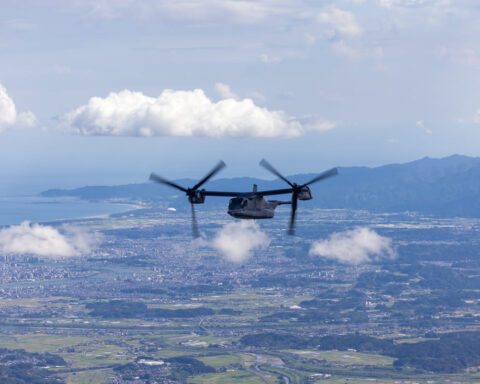
Boeing has moved a new unmanned tiltrotor into formal concept work to team up with U.S. Army helicopters on attack, reconnaissance, and contested logistics missions. Company engineers described a gas-turbine aircraft offering two tilting proprotors, modular payload bays, and autonomy for cooperative
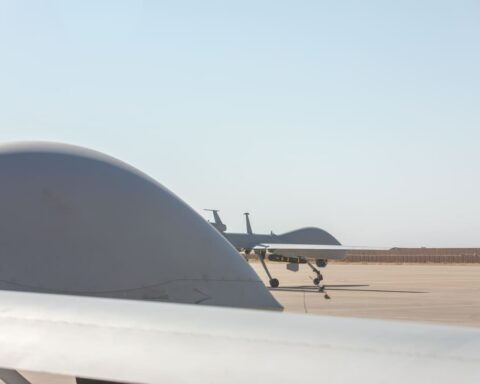
General Atomics Aeronautical Systems and Hanwha Aerospace signed a co-development and co-production agreement for a Short Takeoff and Landing version of Gray Eagle during AUSA 2025. The plan calls for a production-representative aircraft, first flight in 2027, and initial deliveries in 2028.
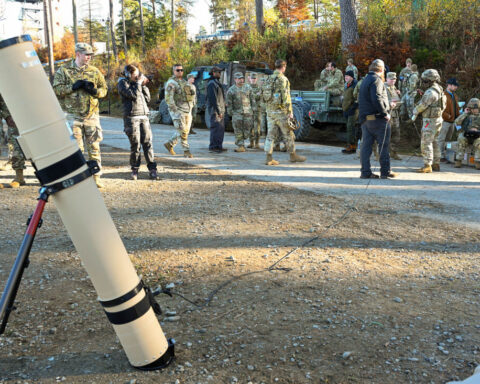
AV announced three updates to the Switchblade line and introduced a compact VTOL helicopter UAS for longer missions with heavier payloads. The reveals at AUSA in Washington tie to Army efforts on loitering munitions and Group 2 drones. Switchblade 400 Targets LASSO
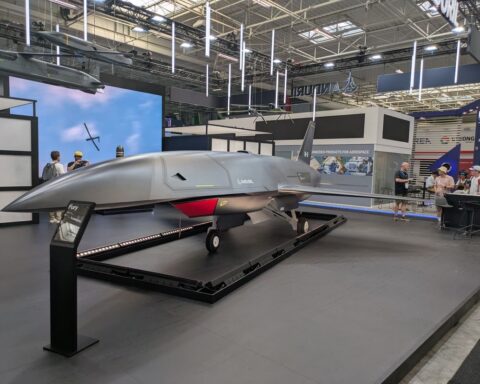
Palmer Luckey warned reporters in mid-October that the government shutdown would “certainly” set back the first flight of Anduril’s Collaborative Combat Aircraft prototype. “I can’t fund the government,” he said, pointing to approvals and support functions that pause when agencies close. The
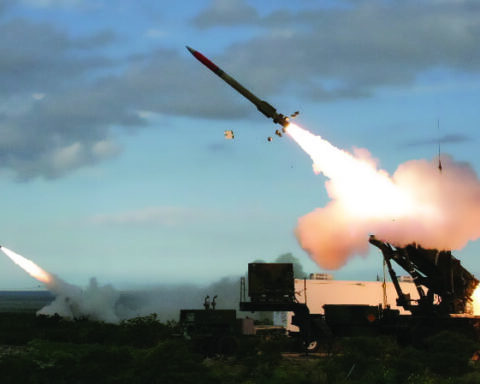
Lockheed Martin fired a Joint Air-to-Ground Missile from a new four-cell launcher built for vertical launch and shipboard counter-UAS missions, completing an initial ground test ahead of a planned intercept against a live drone. Yuma Ground Test and Planned China Lake Intercept
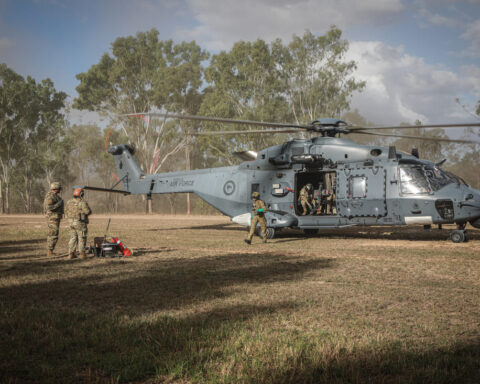
Wellington crews brought two Royal New Zealand Air Force NH90s home from Australia on a two-day itinerary that pushed the type’s over-water range across the Tasman. Defense officials confirm 1,534 nautical miles over water from RAAF Base Amberley to RNZAF Base Auckland,
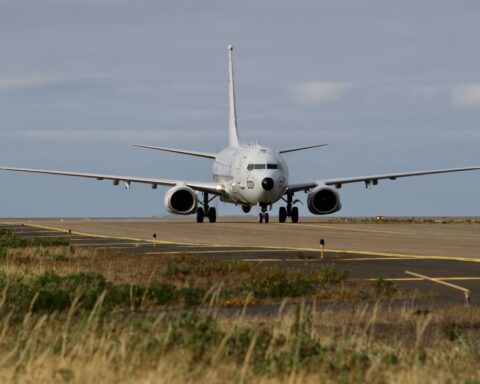
Germany accepted its first P-8A Poseidon at the manufacturer’s site near Seattle on Oct 1-2. The aircraft is the first of eight on order and carries the German tail number 63+01. Delivery followed U.S. Foreign Military Sales procedures with government quality checks
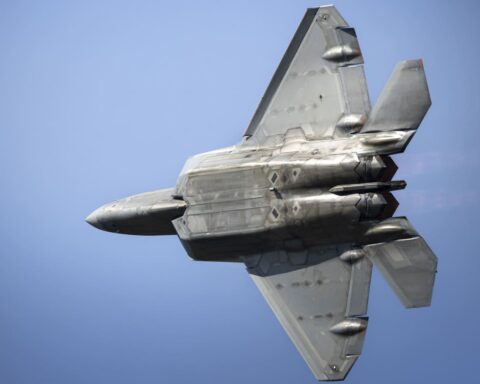
The U.S. Air Force’s first F-47 is in build at Boeing with first flight planned for 2028, Gen. David Allvin said during the service’s annual gathering at National Harbor. The remarks marked the program’s clearest public schedule since the contract award in
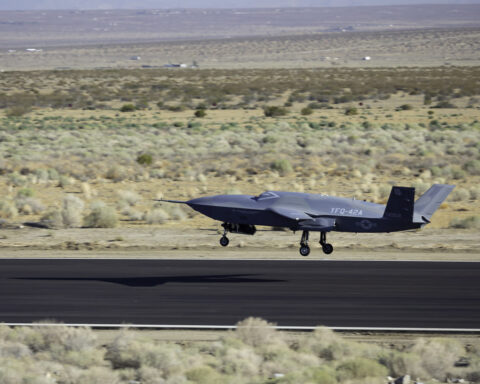
General Atomics' YFQ-42A collaborative combat aircraft completed its first flight on August 27, 2025, with the U.S. Air Force announcing the milestone the same day.
Aircraft covers military fixed-wing from fighters to airlifters. The engines that decide their range and most of their schedule risk sit in Aircraft Propulsion. Aircraft (Civil/Military Systems) handles the airliner-derived tankers, patrol aircraft and special-mission conversions. Helicopters follows rotary-wing procurement and sustainment.
Naval Systems runs from surface combatants to submarines and the yard capacity behind them. Armor, artillery and battlefield logistics are in Land Systems. Space Systems handles satellites, launch access and orbital infrastructure, and Surveillance & Reconnaissance the sensors that turn all of it into usable information.