Fleet size is the number that gets quoted. What a force can actually put in the air on a given morning is a different figure, and usually a much smaller one. An air arm holding 180 fighters at a 55 percent mission-capable rate fields fewer than one holding 120 with good spares support.
This section covers hardware across air, land, sea and space. Combat aircraft, rotorcraft, warships and submarines, armored vehicles, satellites, and the sensors that tie them together. New programs are followed from requirement to service entry, existing fleets through their upgrades, which usually matter more since most of the equipment flying in 2040 is already built.
Most of what changes a platform arrives after delivery: a new radar, a software drop, a sustainment contract that fixes a parts problem at last, or a quiet decision to delete a capability nobody funded.
Specifications are reported where a program office or a budget document supports them. Where they do not, the number is called an estimate.
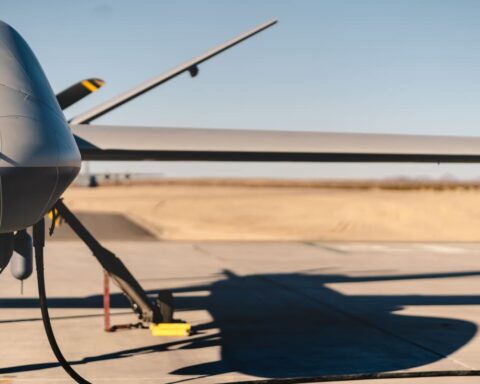
Belgium's lead MQ-9B SkyGuardian arrived at Florennes Air Base on 18 August, flown from the United States inside a Belgian A400M. Defence officials say the airframe passed its acceptance test on 22 July before the ferry flight. The Air Component will unveil
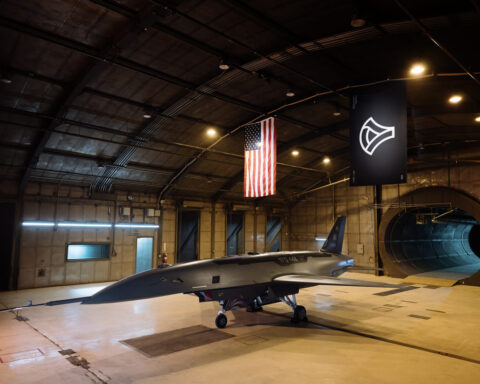
The Air Force's two Collaborative Combat Aircraft prototypes have entered the first-flight window. General Atomics Aeronautical Systems' YFQ-42A and Anduril Industries' YFQ-44A completed engine runs and taxi trials over the summer, and are staged at their respective test sites pending weather, range
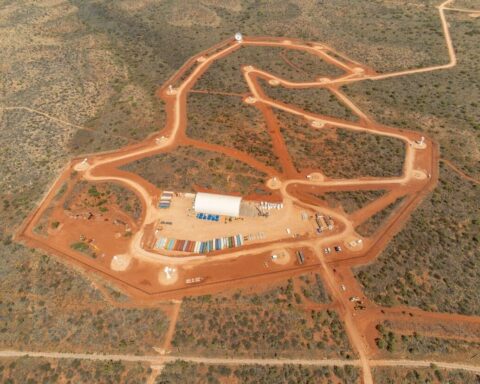
Northrop Grumman and the U.S. Space Force achieved a first for the Deep-Space Advanced Radar Capability at Site 1 in Western Australia, synchronizing multiple ground antennas to act as one radar and track several satellites in geosynchronous orbit. Program officials described a
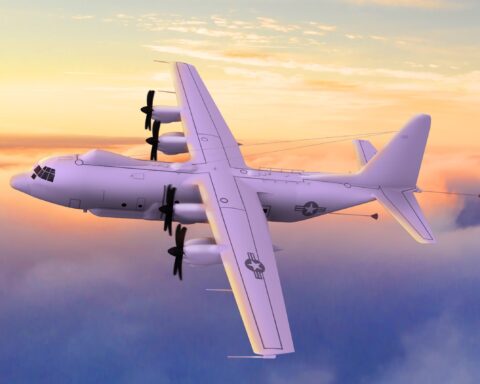
The Navy has given its next-generation nuclear command-and-control aircraft a name: Phoenix II. The service announced the designation on Aug. 7, 2025 and tied the choice to the C-130 family's long service in related roles. The airframe will form the backbone of
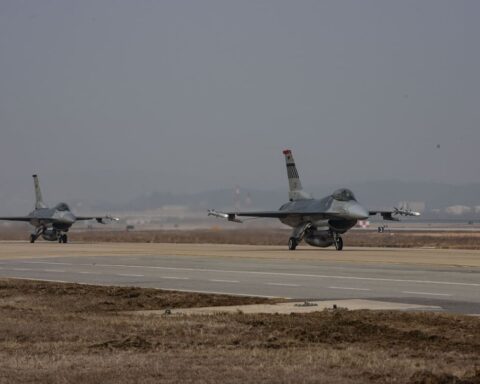
The Air Force is transferring F-16s and personnel from Kunsan Air Base to Osan Air Base to form a second "super squadron" in South Korea. The service describes the transfer as temporary and tied to a defined year-two trial.
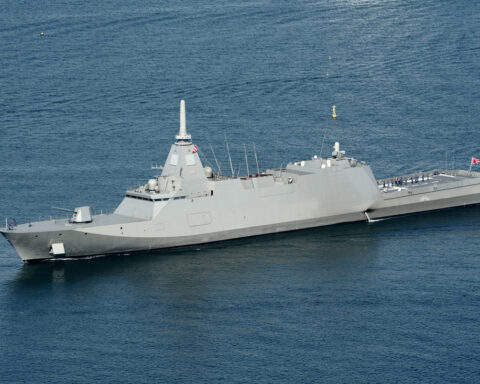
Canberra has selected an upgraded Mogami-class frigate for the Navy's general-purpose program after a full competition. Ministers described it as a practical choice-one that closes the gap between need and delivery without starting from scratch. Defense officials reported that cabinet signed off
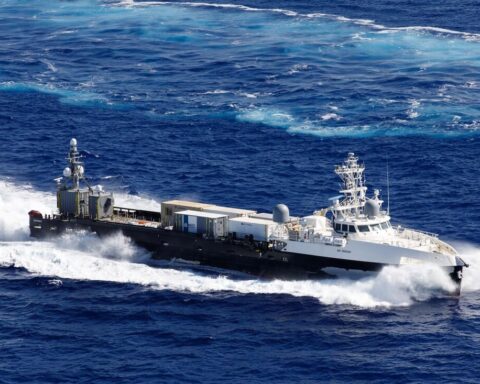
The U.S. Navy issued a formal solicitation on July 28, 2025, for a new class of unmanned surface vessels-Modular Attack Surface Craft (MASC)-designed to move from contract award to prototype delivery within 18 months and then scale production across multiple shipyards. White
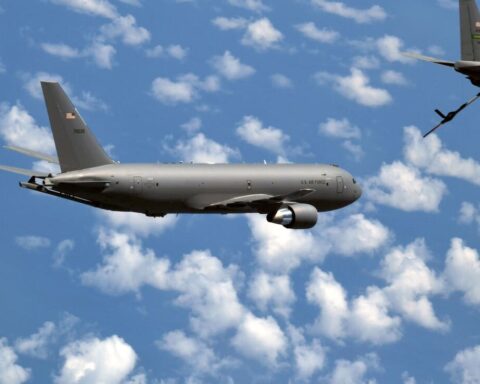
The U.S. Air Force has authorized an extension to KC-46A production for up to 75 additional aircraft. Senior leaders announced this decision in the past two weeks to sustain the tanker recapitalization line once the current contract expires. Under the original 2011
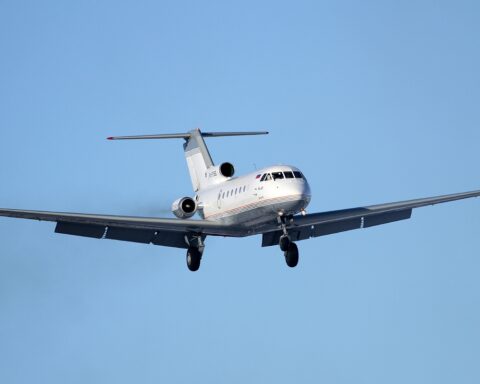
Novosibirsk, Russia - A Yakovlev Yak-40 flying laboratory lifted off from SibNIA's Yeltsovka airfield on July 14, logging the first airborne run of UZGA's new VK-800 turboprop. The 15-minute sortie reached roughly 700 meters and about 340 kilometers per hour. Test crews
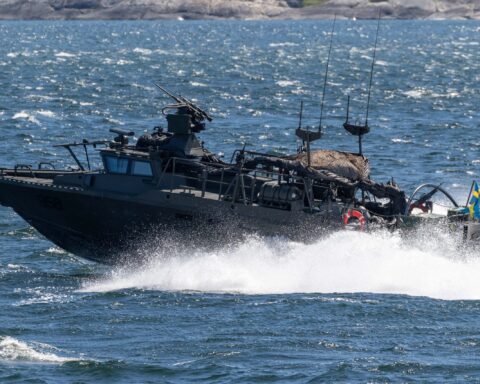
The Swedish Defence Materiel Administration (FMV) has awarded Saab a contract for 22 additional CB90 fast assault boats, placing a fresh £70 million order that lifts Sweden's amphibious capacity at a moment when Baltic security demands rapid response craft.
Aircraft covers military fixed-wing from fighters to airlifters. The engines that decide their range and most of their schedule risk sit in Aircraft Propulsion. Aircraft (Civil/Military Systems) handles the airliner-derived tankers, patrol aircraft and special-mission conversions. Helicopters follows rotary-wing procurement and sustainment.
Naval Systems runs from surface combatants to submarines and the yard capacity behind them. Armor, artillery and battlefield logistics are in Land Systems. Space Systems handles satellites, launch access and orbital infrastructure, and Surveillance & Reconnaissance the sensors that turn all of it into usable information.