The cheapest useful attack drone now costs less than a rifle did a generation ago, and the factory turning out thousands a month does not look like a defense plant. Precision has become abundant, which changes what an army has to protect.
This section covers strike systems and the effectors built to counter them. Cruise and ballistic missiles, hypersonic weapons, air-launched munitions, loitering munitions, one-way attack drones, reconnaissance and armed unmanned aircraft, uncrewed surface vessels, and the counter-UAS side that now runs from guns and nets to high-energy lasers and high-power microwave.
Directed energy is treated on its own terms here. A 50-kilowatt laser needs roughly 150 to 250 kilowatts of prime power and somewhere to dump the waste heat, so the hard part is usually the ship or vehicle carrying it rather than the beam. Range figures are reported with the weather they were achieved in.
Production rate is reported alongside performance wherever a figure exists. Combat use is described from what can be verified, with claims by a party to a conflict attributed to that party.
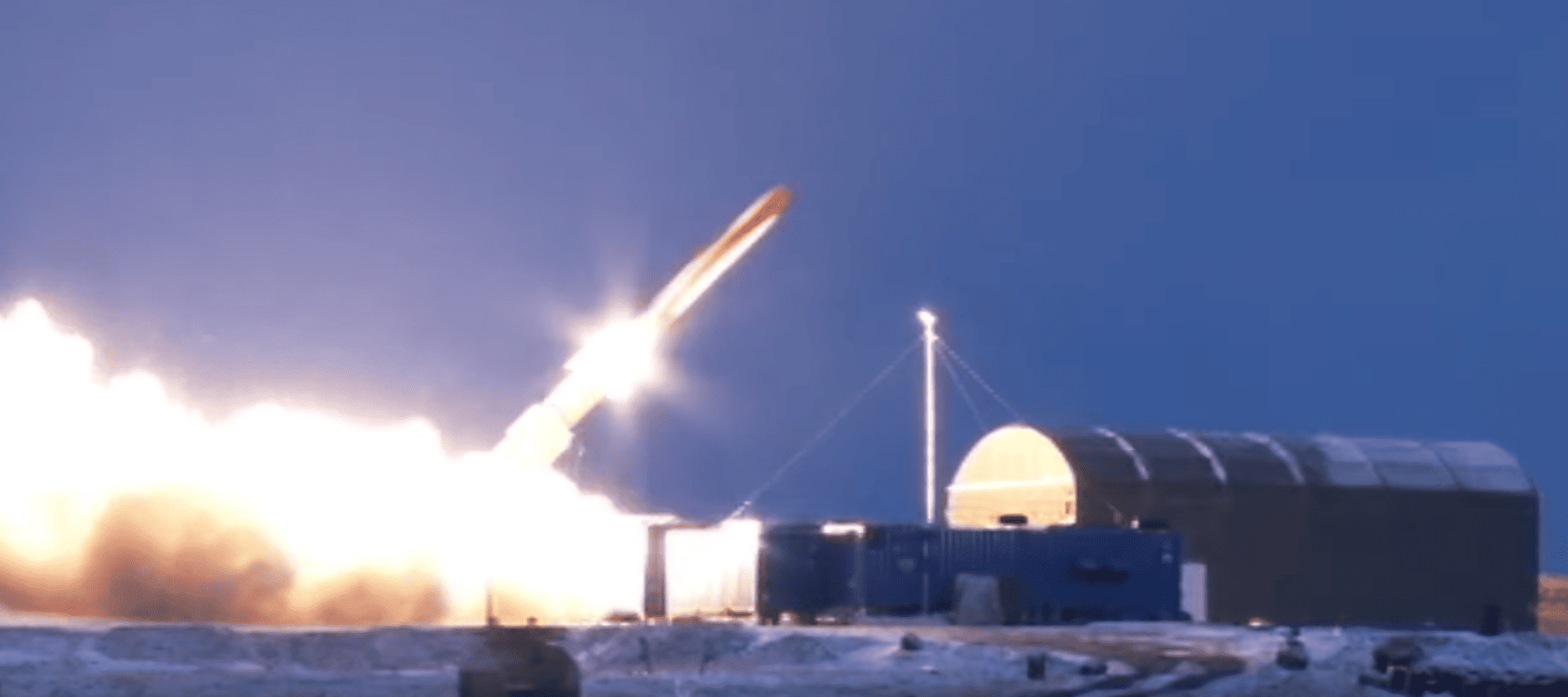
Russia’s leadership announced a new long-range flight for the 9M730 Burevestnik (Skyfall) on Oct 21, describing a subsonic cruise of about 14,000 kilometers in roughly 15 hours. The briefing ran on camera and signaled a push toward preparation for service. No telemetry,
Russian strike aircraft are now dropping jet-powered glide bombs on Ukrainian targets at ranges approaching 200 kilometers, extending the reach of Soviet-era free-fall bombs with bolt-on wings, guidance units, and small turbojet engines. Ukrainian intelligence officers describe a new long-range variant entering
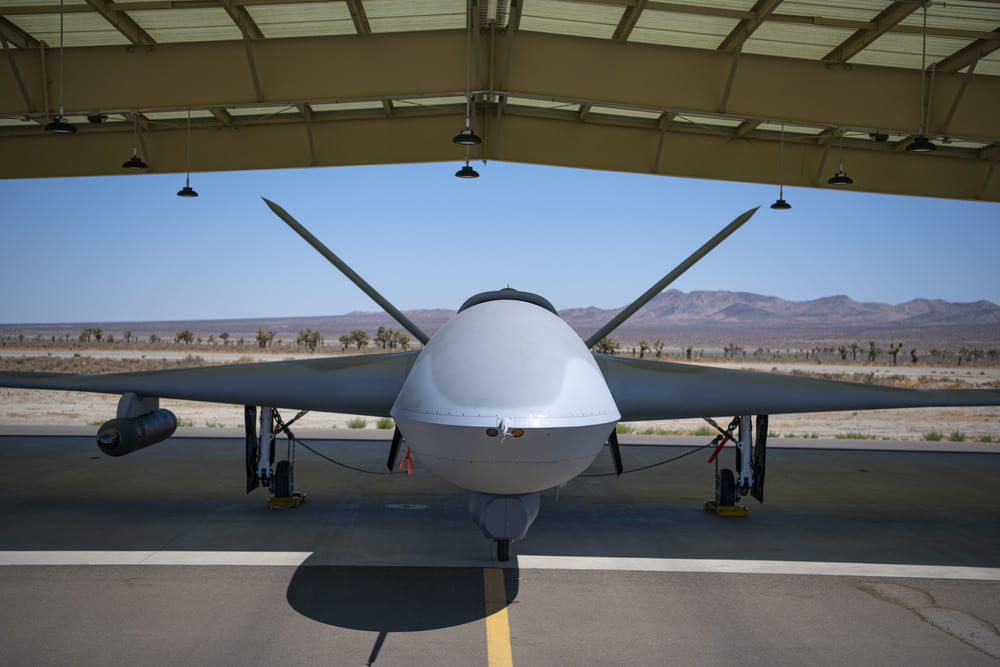
A concept video at AUSA 2025 showed an MQ-20 Avenger with a rotating nose section that projects a laser through a turreted aperture. General Atomics described it as a rendering rather than evidence of a fielded system, yet the configuration aligns with
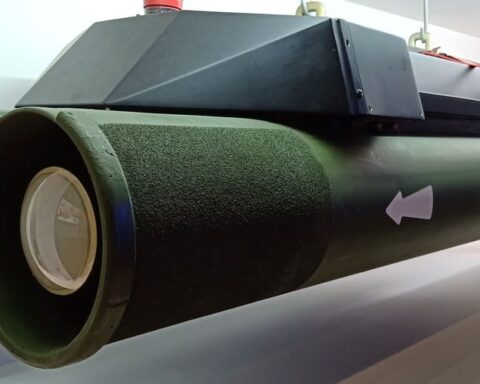
Rafael’s U.S. subsidiary introduced a rocket-powered loitering munition, the L-SPIKE 4X, during the Association of the United States Army exhibition in mid-October. The company presents it as a “Launched Effect” that complements the wider SPIKE family and uses legacy SPIKE launchers and
Taipei’s aerospace and defense show ran September 18-20 at TaiNEX 1 with 490 exhibiting companies across 1,500 booths. Organizers counted 51 first-time products on the floor, signaling a heavier emphasis on unmanned and low-cost strike systems this year. At the Xiangshan Forum
Defense Secretary Pete Hegseth has ordered the Army to establish a new joint interagency task force to speed delivery of counter-drone systems across the U.S. military. The entity, designated Joint Interagency Task Force 401, will sit under the Deputy Secretary of Defense
On September 10, 2025, a public report from federal auditors described options to keep the Minuteman III force in service into 2050, with specific risks tied to sustainment and testing during the transition to the LGM-35A Sentinel. The 2021 plan sent to
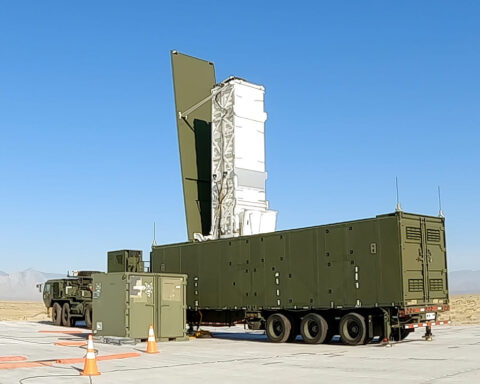
Army planners want a launcher they can move and hide faster than Typhon, the Mid-Range Capability battery that fires SM-6 and Tomahawk. Lt. Gen. Joel "JB" Vowell calls the current rig "rather large, long" because it must stand upright before launch, slowing
Range crews are not often surprised by conditions in Interior Alaska. They are used to below-freezing temperatures at sunrise rapidly changing to muggy noon haze and gusts off the Yukon River that will lay steel antennas sideways. What no one anticipated during
Project Revolver has moved from lab study to fleet priority in less than three years. Senior officers at the Office of Naval Research (ONR) now describe the program as "an essential magazine-depth booster for fast-attack boats operating west of Guam." Defense officials