Fleet size is the number that gets quoted. What a force can actually put in the air on a given morning is a different figure, and usually a much smaller one. An air arm holding 180 fighters at a 55 percent mission-capable rate fields fewer than one holding 120 with good spares support.
This section covers hardware across air, land, sea and space. Combat aircraft, rotorcraft, warships and submarines, armored vehicles, satellites, and the sensors that tie them together. New programs are followed from requirement to service entry, existing fleets through their upgrades, which usually matter more since most of the equipment flying in 2040 is already built.
Most of what changes a platform arrives after delivery: a new radar, a software drop, a sustainment contract that fixes a parts problem at last, or a quiet decision to delete a capability nobody funded.
Specifications are reported where a program office or a budget document supports them. Where they do not, the number is called an estimate.
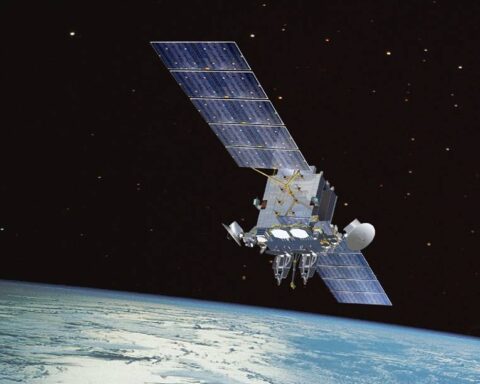
The U.S. Space Force has selected Boeing to build the first two satellites of the Evolved Strategic SATCOM program, issuing a $2.8 billion fixed-price-incentive contract that includes options for two more spacecraft. The decision, announced late July 3, positions the company to
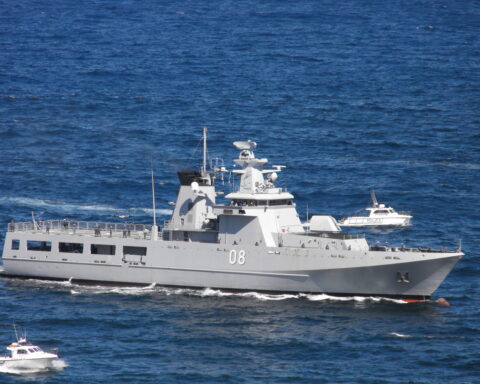
The Royal Australian Navy has added a new hull to its order of battle. On 28 June the service commissioned HMAS Arafura, first of the Arafura-class offshore patrol vessels, during a ceremony at Fleet Base West near Fremantle. Defense officials confirm the
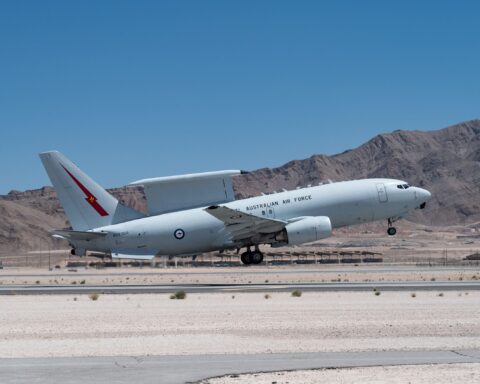
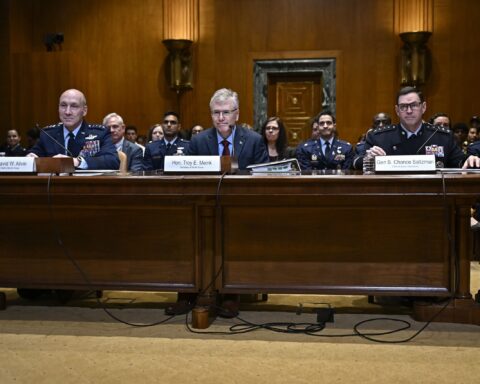
The U.S. Air Force has decided to halt the E-7 Wedgetail airborne early-warning and control program, ending a three-year effort to replace the aging E-3 Sentry fleet with a more modern, radar-equipped 737 derivative. Defense officials disclosed the move during the FY-26
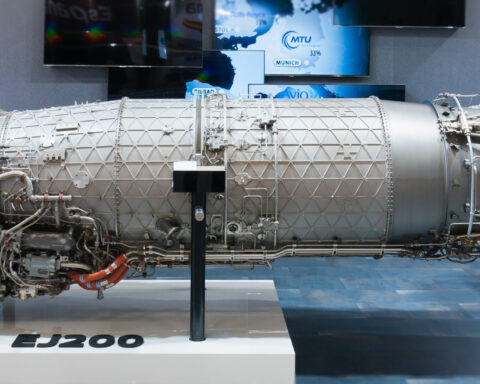
EUROJET Turbo GmbH has agreed to deliver up to fifty-four new EJ200 engines for the Italian Air Force's forthcoming batch of twenty-four Eurofighter Typhoons. Defense officials confirm the deal was signed in Rome with the NATO Eurofighter & Tornado Management Agency (NETMA)
The Space Force wants $277 million next year to launch the Military Internet (MILNET) constellation and has frozen money for the Space Development Agency's Tranche 3 Transport Layer. Defense officials confirm the shift appears in the service's fiscal 2026 budget books, released
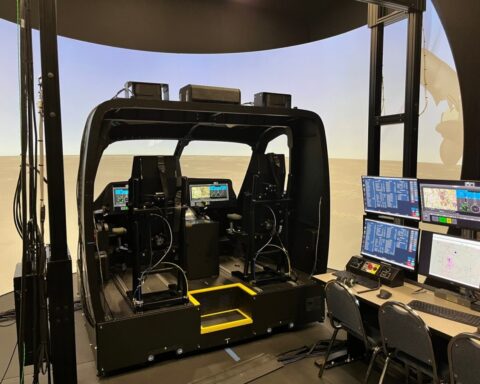
Bell Textron has handed the first MV-75 virtual prototype to the U.S. Army, marking a concrete step in the Future Long-Range Assault Aircraft program. Defense officials confirm the hand-off took place at Redstone Arsenal, Alabama, on 24 June, only eighteen months after
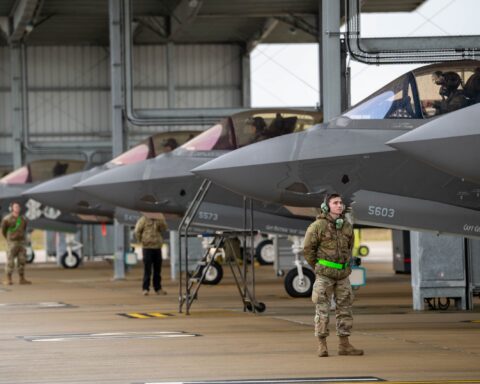
The United Kingdom confirmed it will acquire at least twelve F-35A Lightning II fighters, adding a land-based nuclear mission to the Royal Air Force for the first time since 1998. Defense officials confirm the jets will form part of NATO's Dual-Capable Aircraft
WASHINGTON — The Chinese spacecraft Shijian-21 and Shijian-25 have come within docking range high over the equator twice this month, and data suggest a third close pass is hours away. According to industry sources, the two satellites occupy nearly identical geostationary slots
The Defense-Aerospace editorial team has confirmed that Lockheed Martin is pressing ahead with the Hybrid Base Station upgrade for its Sniper Advanced Targeting Pod. The move clears a long-standing barrier that limited how much targeting and sensor data an F-35 could pass
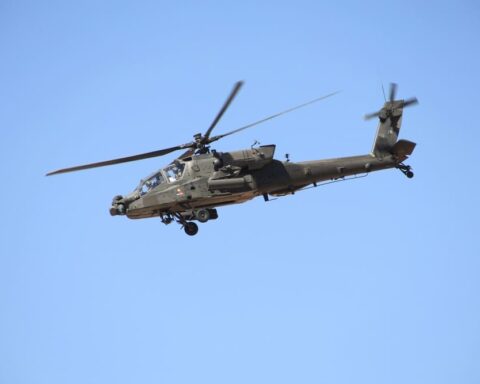
Three AH-64D Apache attack helicopters landed this morning at the 56th Air Base in Latkowo, near Inowrocław. They taxied to the ramp in quick succession, rotors still spinning while ground crews signaled them into place. Defense officials confirm these aircraft now belong
Aircraft covers military fixed-wing from fighters to airlifters. The engines that decide their range and most of their schedule risk sit in Aircraft Propulsion. Aircraft (Civil/Military Systems) handles the airliner-derived tankers, patrol aircraft and special-mission conversions. Helicopters follows rotary-wing procurement and sustainment.
Naval Systems runs from surface combatants to submarines and the yard capacity behind them. Armor, artillery and battlefield logistics are in Land Systems. Space Systems handles satellites, launch access and orbital infrastructure, and Surveillance & Reconnaissance the sensors that turn all of it into usable information.