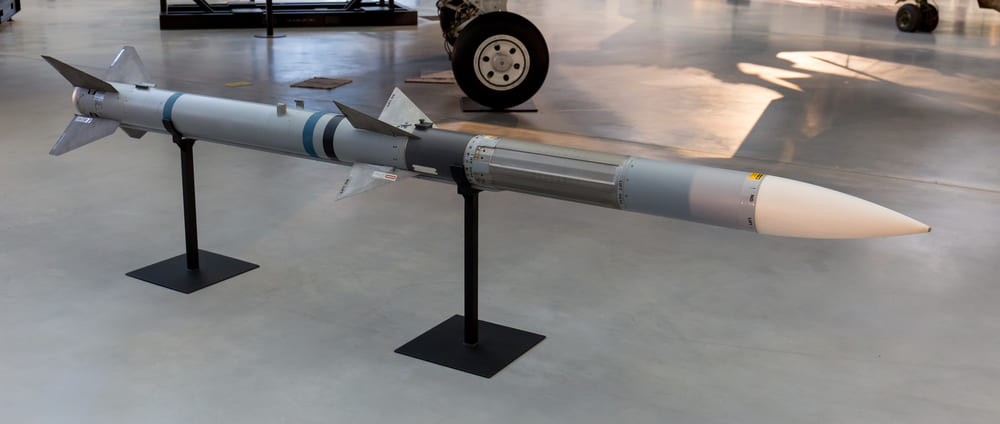
The MQ-28A Ghost Bat has carried out its first live air-to-air missile shot. During a Dec. 8 test event at the Woomera Test Range in South Australia, it fired an AIM-120 Advanced Medium-Range Air-to-Air Missile. Officials say the missile successfully engaged and destroyed an Australian-made Phoenix Jet uncrewed aerial target.
The shot took place during Trial Kareela 25-4. Public information stays limited, but official statements and released imagery show the launch sequence and the crewed-uncrewed setup used in the engagement.
Live-fire configuration and target
The live-fire used one AIM-120 carried externally. Images from loading and takeoff show the missile on a prominent pylon on the left underside of the aircraft, under the engine intake area. The Ghost Bat configuration shown for this trial does not use an internal weapons bay, so the external pylon is the visible integration method at this stage.
The target was the Phoenix Jet uncrewed aerial target. Government statements describe it as Australian-made. The Phoenix Jet is a jet-powered aerial target used in weapons work and range trials, and it has supported local test programs for years.
The AIM-120 is the standard medium-range air-to-air missile carried by Royal Australian Air Force fighters. Minister for Defence Industry Pat Conroy called it “the standard medium-range air missile of the Royal Australian Air Force,” while confirming the Ghost Bat destroyed the Phoenix target during the test.
Sensors and external features seen in imagery
Photos from the event show the program’s modular approach in use. At least two Ghost Bats have previously appeared with an infrared search and track sensor fitted in the nose. Imagery tied to the AMRAAM shot does not show that same IRST fit, which points to a different nose module for this trial.
The aircraft used for the live-fire also shows a pronounced nose radome with a serrated edge, a feature seen on earlier test airframes. Official comments in recent months have mentioned future options beyond passive sensors, alongside the ability to fit different sensor packages.
E-7A control and F/A-18F support during the engagement
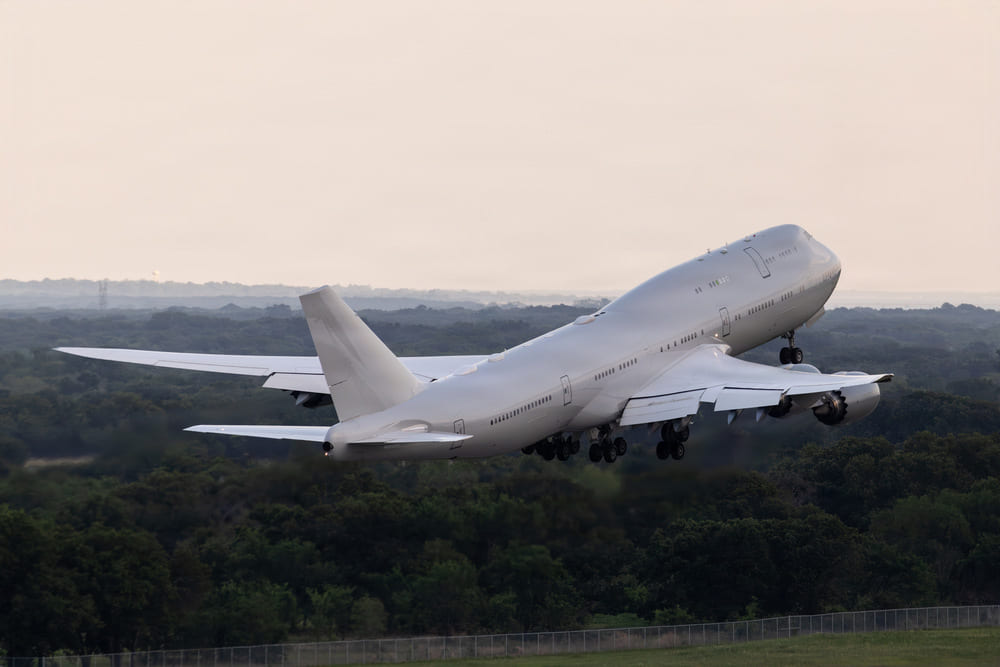
The Dec. 8 event involved three platforms: an MQ-28A, an E-7A Wedgetail, and an F/A-18F Super Hornet. The MQ-28A fired the missile. The E-7A provided control and engagement authorization. The Super Hornet contributed sensor coverage and helped build the targeting picture.
Boeing says an E-7A operator took “custodianship” of the MQ-28 once it was airborne, with responsibility for safety and engagement oversight. Boeing also says the F/A-18F teamed with the MQ-28 in combat formation, then shared targeting data across all three aircraft after it identified and tracked the target. The MQ-28 adjusted its position and received authorization from the E-7A to engage.
Royal Australian Air Force leadership described the structure in similar terms. Air Marshal Stephen Chappell said the E-7 held custodianship while the MQ-28 operated alongside Super Hornets, with a target handoff through the E-7 before command authorities were passed for the MQ-28 to deploy, engage, and fire.
Officials have described the human role as issuing high-level commands rather than continuous stick-and-rudder control. Boeing and the government have not released the full control scheme, the data links, or the sensor chain used in the final moments before launch.
Amy List, Boeing Defence Australia managing director, said the test was “the first time an autonomous aircraft has completed an air-to-air weapon engagement with an AIM-120 missile,” and she called it a maturity point for the aircraft as a collaborative combat platform.
Block 2 purchases and Block 3 development funding
The live-fire came alongside a major funding decision tied to an operational pathway. The Australian government announced an investment of about A$1.4 billion to advance collaborative air capabilities, with the MQ-28A central to the package. The government said the aim is to transition the MQ-28A “into a fully operational” asset for the Australian Defence Force.
New contracts with Boeing Defence Australia cover six operational Block 2 MQ-28A aircraft and development of an enhanced Block 3 prototype. The government describes the Block 2 aircraft as laying the foundation for an “operational Air Combat Platform capability” within the Royal Australian Air Force.
Conroy added schedule and industrial details in a press conference. He said Block 2 aircraft move into production in 2026, with the first aircraft from an earlier contract expected by the end of 2026, followed by the additional six. He also said production will move from Boeing’s Fishermans Bend facility in Melbourne to a new site at Wellcamp outside Brisbane.
The government announcement also links the program to local industry participation. It says the Ghost Bat program supports more than 440 high-skilled jobs and involves more than 200 Australian suppliers, with 70 percent of program expenditure directed to Australian industry. The same release places MQ-28A work inside a broader national drone plan, stating an intent to invest more than A$10 billion on drones over the next decade, with at least A$4.3 billion allocated to uncrewed aerial systems.
Deputy Prime Minister and Minister for Defence Richard Marles said the event “underlines its growing potential to deliver an operational capability for the Royal Australian Air Force.”
Conroy described the role as follows: “The Ghost Bat transforms a single fighter jet into a formidable team—capable not only of surveillance but also of engaging adversaries.” He also said the aircraft can take different nose sensor packages, “including, for example, infrared search and track,” and it has the capability to carry missiles.
Notes on autonomy and broader context
Colin Miller, vice president and general manager for Phantom Works, said the mission autonomy approach relies on “open standards and government architectures,” and he said the team integrated and employed the weapon “in a live, operationally relevant scenario in under eight months.”
Other countries are also testing air-to-air weapons from uncrewed platforms. Turkey’s Bayraktar Kızılelma has been publicly reported as completing an air-to-air target engagement with the Gökdoğan missile in late November 2025. The Australian event stands out for its crewed-uncrewed chain that ran through the E-7A, and for the use of a widely fielded Western missile type.
Official accounts of Trial Kareela 25-4 keep returning to the same control arrangement. The E-7A crew held custodianship, cleared the engagement, and supervised the MQ-28A through the shot, while the F/A-18F supported the targeting picture inside the formation.
REFERENCE SOURCES
- https://www.minister.defence.gov.au/media-releases/2025-12-09/funding-boost-australian-made-ghost-bat
- https://www.minister.defence.gov.au/transcripts/2025-12-09/press-conference-sydney
- https://boeing.mediaroom.com/2025-12-09-Boeing%2C-RAAF-Achieve-CCA-Missile-Fire-from-MQ-28-Ghost-Bat
- https://www.boeing.com.au/news/2025/boeing-awarded–754-million-ghost-bat-program-of-record
- https://www.aerosociety.com/news/dubai-airshow-2025-first-news/
- https://www.qinetiq.com/en-au/what-we-do/services-and-products/phoenix-jet-uncrewed-aerial-target
- https://www.navalnews.com/naval-news/2025/11/turkiyes-unmanned-fighter-jet-bayraktar-kizilelma-hits-target-at-first-air-to-air-test-firing/