An interceptor that works costs more than the thing it destroys, and there are fewer of them than anyone would like. That exchange ratio has become the organizing problem of modern weapons development. A one-way attack drone assembled for a few tens of thousands of dollars can force the launch of a missile costing several million, and no magazine survives that trade for long.
This section covers the effectors and the software around them. Missiles and munitions, unmanned systems, air and missile defense, electronic warfare, cyber, lasers and high-power microwave, autonomy, propulsion, and the mission software that decides how quickly any of it can be changed.
Demonstrations are treated as demonstrations. A laser that shot down a drone on a range in good weather is not a fielded capability, and coverage says which one it is.
Production rate matters as much as performance. A weapon nobody can build at scale is a briefing slide.
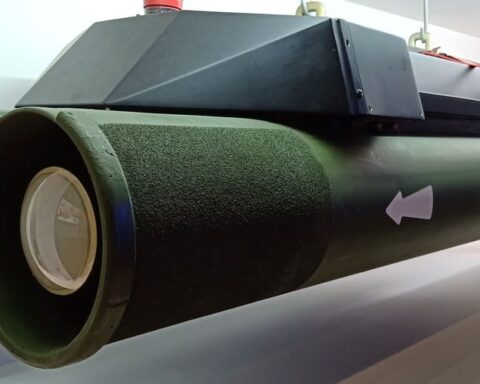
Rafael’s U.S. subsidiary introduced a rocket-powered loitering munition, the L-SPIKE 4X, during the Association of the United States Army exhibition in mid-October. The company presents it as a “Launched Effect” that complements the wider SPIKE family and uses legacy SPIKE launchers and
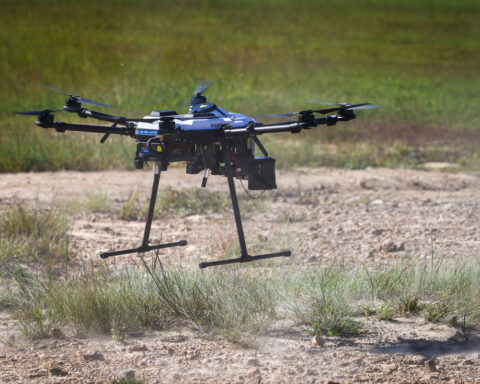
Col. Guy Yelverton, who leads the Army’s counter-drone product office, told an AUSA audience the service will run industry competitions “at least at an every two-year cycle” to match fast-changing threats and reduce delays between demonstrations and fielding. “We need to ensure
Two Direct to Phase II SBIR awards, each worth $3 million over 24 months, will fly radar-warning receiver payloads on Space Force spacecraft in geosynchronous orbit. Program staff plan to select two vendors before year’s end. Defense officials confirm coordination to raise
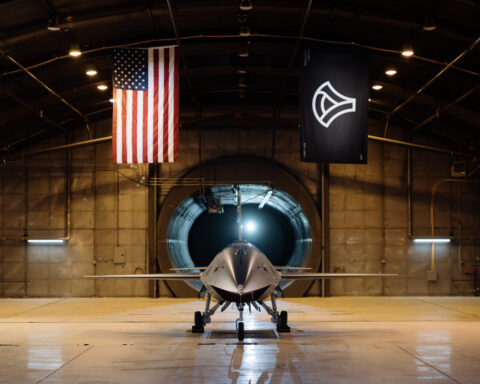
Northrop Grumman’s Model 437 Vanguard flew again on September 20 after months of modification for the Beacon autonomy program. Company engineers installed the Prism autonomy stack, integrated new interfaces and prepared the aircraft for envelope expansion sorties at Mojave before partner software
Gen. Ingo Gerhartz urged deployment timelines counted in months for counter-drone units across allied territory, using public remarks at the Warsaw Security Forum on Sept 29-30 to press the point. He now commands NATO’s Joint Force Command Brunssum and paired the schedule
Air Force leadership set mid-October for the first flight of Anduril’s YFQ-44A, the company’s entrant in the Collaborative Combat Aircraft program. The aircraft will use push-button departure and recovery with no conventional stick and throttle while human operators watch from the ground.
Taipei’s aerospace and defense show ran September 18-20 at TaiNEX 1 with 490 exhibiting companies across 1,500 booths. Organizers counted 51 first-time products on the floor, signaling a heavier emphasis on unmanned and low-cost strike systems this year. At the Xiangshan Forum
The Army will extend identity, credential and access management across the enterprise and into field units this year. Officials expect wider use of automated account provisioning and privileged access tools by the end of 2025, with more systems added as connectors mature.
Defense Secretary Pete Hegseth has ordered the Army to establish a new joint interagency task force to speed delivery of counter-drone systems across the U.S. military. The entity, designated Joint Interagency Task Force 401, will sit under the Deputy Secretary of Defense
U.S. investigators say a long-running Chinese cyber campaign hit more than 80 countries and reached far beyond phone companies. Security teams traced the operation across telecommunications backbones and into government, transportation, lodging and military infrastructure.
Missiles / Drones / Directed Energy carries the effectors: cruise and ballistic weapons, loitering munitions, unmanned systems, and the lasers and high-power microwave now being fielded against them. What all of it is aimed at, and what shoots it down, is in Air & Missile Defense Systems.