An interceptor that works costs more than the thing it destroys, and there are fewer of them than anyone would like. That exchange ratio has become the organizing problem of modern weapons development. A one-way attack drone assembled for a few tens of thousands of dollars can force the launch of a missile costing several million, and no magazine survives that trade for long.
This section covers the effectors and the software around them. Missiles and munitions, unmanned systems, air and missile defense, electronic warfare, cyber, lasers and high-power microwave, autonomy, propulsion, and the mission software that decides how quickly any of it can be changed.
Demonstrations are treated as demonstrations. A laser that shot down a drone on a range in good weather is not a fielded capability, and coverage says which one it is.
Production rate matters as much as performance. A weapon nobody can build at scale is a briefing slide.
Dutch military and domestic intelligence services report that a China-linked espionage group known as Salt Typhoon struck targets in the Netherlands and touched national critical infrastructure. The services identified activity against smaller internet service and hosting providers.
ANKARA - Turkey has launched a $1.5 billion expansion centered on Aselsan's new Oğulbey Technology Base, an integrated campus officials describe as the largest single defense industry investment in the country and Europe's biggest air-defense complex. The project is tied directly to
The Pentagon has ordered the Army to stand up Joint Interagency Task Force 401 and shut down the Joint Counter-small Unmanned Aircraft Systems Office once the new team is in place.
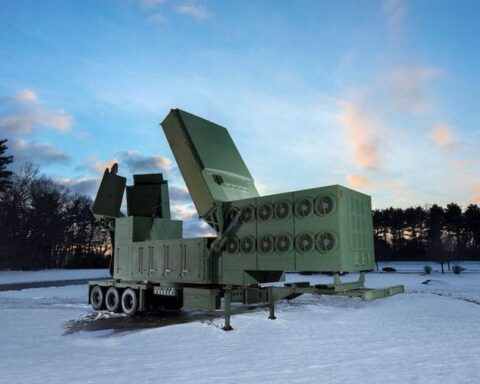
The U.S. Army has awarded Raytheon, an RTX business, a $1.7 billion contract modification to produce the Lower Tier Air and Missile Defense Sensor, the radar chosen to replace the Patriot system's legacy sensor.
On September 10, 2025, a public report from federal auditors described options to keep the Minuteman III force in service into 2050, with specific risks tied to sustainment and testing during the transition to the LGM-35A Sentinel. The 2021 plan sent to
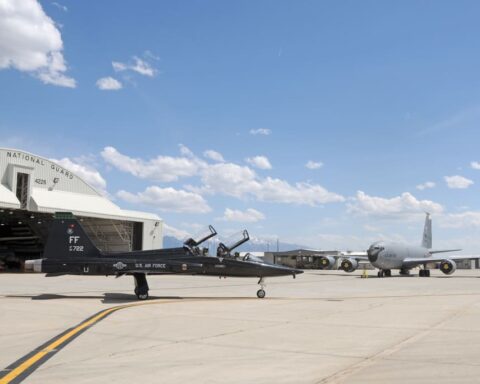
Roland R. Wright Air National Guard Base in Salt Lake City will host two Air National Guard cyber operations squadrons under a Department of the Air Force stationing decision published Sept. 11. The 109th Air Control Squadron will be inactivated under the
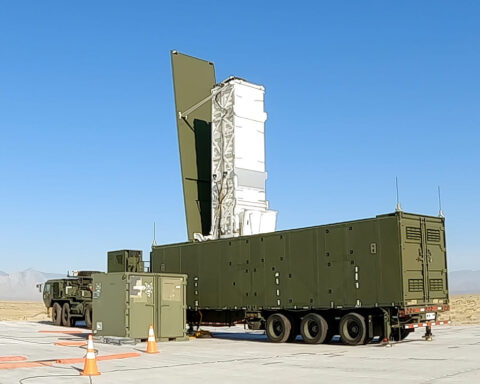
Army planners want a launcher they can move and hide faster than Typhon, the Mid-Range Capability battery that fires SM-6 and Tomahawk. Lt. Gen. Joel "JB" Vowell calls the current rig "rather large, long" because it must stand upright before launch, slowing
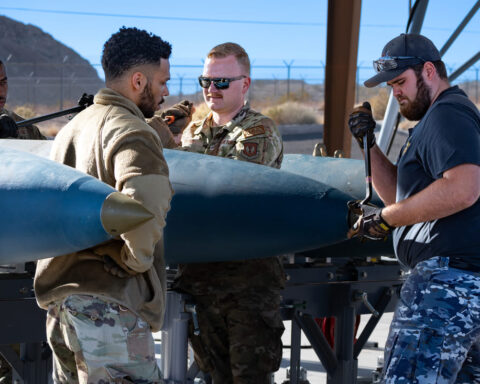
Applied Research Associates secured a 24-month award from the Air Force Life Cycle Management Center’s Eglin Munitions Directorate to act as System Design Agent for an air-to-ground Next Generation Penetrator. The company will build and test sub-scale and full-scale articles under the
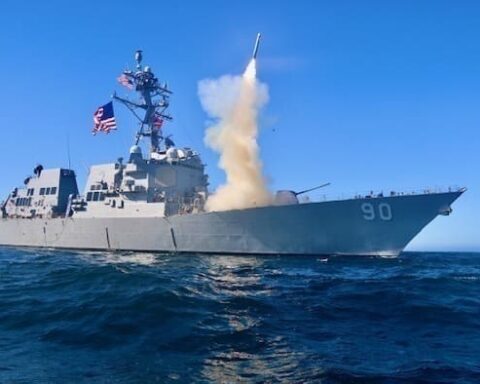
The U.S. Navy will expand the number of Tomahawk cruise missiles configured for anti-ship missions with a new tranche of Block V upgrades to field the Maritime Strike Tomahawk seeker. Defense officials confirm the requirement covers from 35 to 96 missiles and
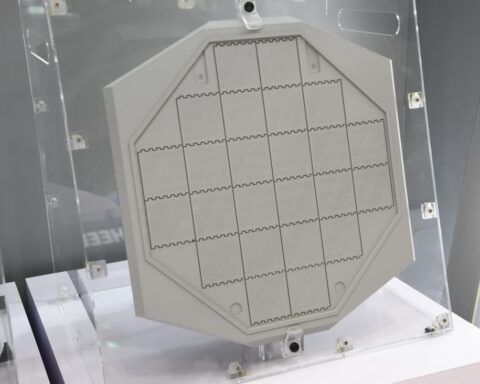
The U.S. Navy and Raytheon, an RTX business, have completed the first live maritime test of the AN/SPY-6(V)4 radar at the Pacific Missile Range Facility, Barking Sands, Hawaii. The event produced real world data on air and surface target tracks and confirmed
Missiles / Drones / Directed Energy carries the effectors: cruise and ballistic weapons, loitering munitions, unmanned systems, and the lasers and high-power microwave now being fielded against them. What all of it is aimed at, and what shoots it down, is in Air & Missile Defense Systems.